Mayor Terry unveils $514 million fiscal‑year 2025 budget focused on pay, housing and infrastructure
Loading...
Summary
Mayor Terry presented a $514 million proposed budget that increases employee pay, boosts affordable‑housing and neighborhood revitalization funding, adds road and parks maintenance dollars and advances investments in public safety while flagging sewer consent‑decree costs and options to phase in a CCD rate. Key program details and revenue assumptions were provided by departmental leads.
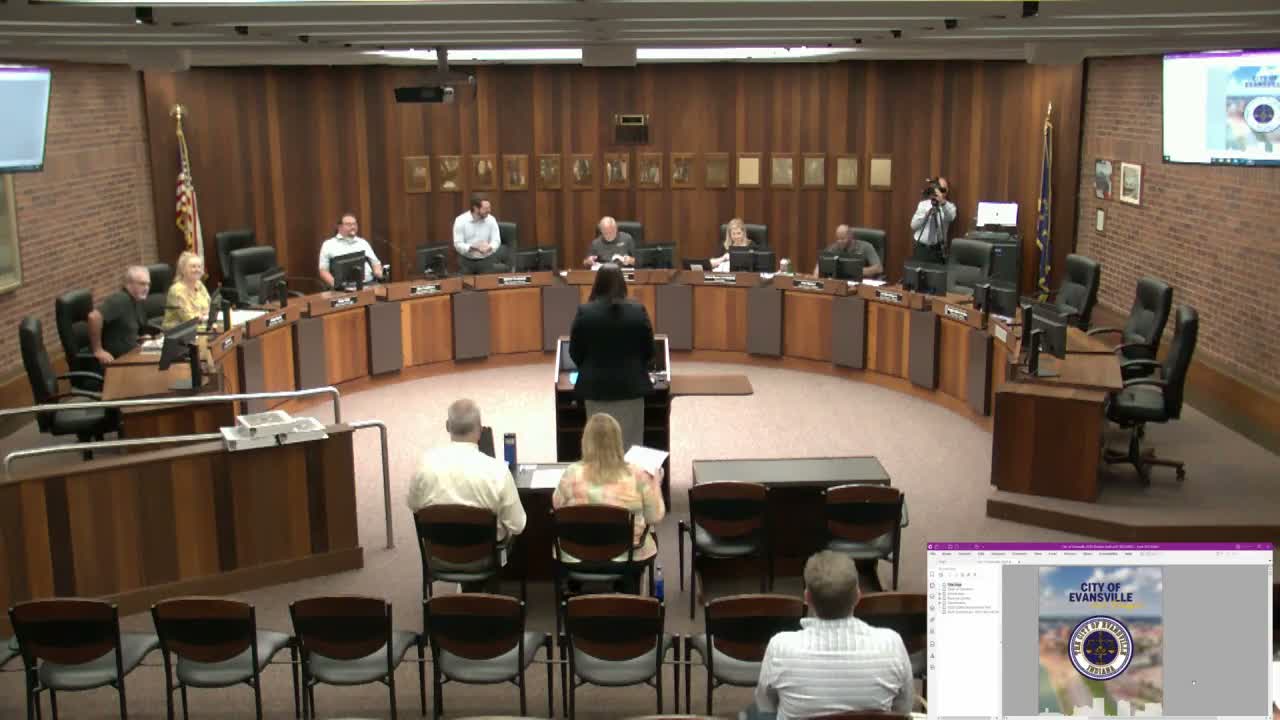
Mayor Terry on Wednesday presented the City of Evansville’s proposed fiscal‑year 2025 budget, a $514,000,000 plan she said “prioritizes people and place” by directing new resources to employee compensation, neighborhood revitalization, affordable housing and infrastructure.
“This budget, totaling $514,000,000, reflects our collective commitment to public safety, neighborhood revitalization, economic development, youth recreation, and delivering high quality services for our residents,” Mayor Terry said during the hearing. She highlighted that the general fund held nearly $54,000,000 in cash investments as of June 24 and that all funds totaled about $463,800,000.
The mayor asked the council to approve a 3% across‑the‑board raise for non‑bargaining city employees and recommended a 7% increase for officers in the police and fire departments. She said the increases respond both to state labor‑law changes and to long‑running concerns about pay: “City employees… have not received a meaningful raise since 2013,” she said.
Affordable housing, blight remediation and resident supports are central to the package. The administration proposes raising the Affordable Housing Trust Fund to $1,000,000 and expanding homeowner repair assistance; after the mayor increased forgivable loan caps from $10,000 to $25,000 this year, the department paused applications when demand overwhelmed capacity. The water utility’s enhanced bill relief program—raised from $10 to $30 per month—and an optional leak‑repair grant of up to $1,000 per household were cited as direct aid to residents; staff reported more than 2,200 signups for the relief program and roughly 100 enrollments in the leak‑repair option.
On infrastructure, the mayor proposed adding more than $2,500,000 to the roads budget for paving and maintenance and said the budget includes new CIP funding for parks repairs and park lighting. The administration also plans to ask the redevelopment commission to review underperforming TIF parcels and is exploring a cumulative capital development (CCD) rate; the mayor’s presentation estimated a CCD levy at the statutory maximum could generate roughly $2,600,000 annually.
City Controller Robert and department directors provided the technical detail behind those headlines. Controller Robert told the council the administration is using conservative revenue assumptions from state assessment estimates (an 8% assessed‑value increase was cited) and is budgeting for a property‑tax cap (the so‑called circuit breaker) that will reduce gross property tax receipts by an estimated $22,600,000 this year.
Councilors and department heads probed many line items over the course of the hearing—from parks and pool maintenance to methane‑ and traffic‑signal replacements—and were advised that some federal funds (CDBG/ESG/HOME) will be removed from the main draft because they follow a separate federal approval process. The controller said the document presented was a draft that will be revised and reissued before council action.
The council recessed with plans to reconvene for joint department budget reviews with Vanderburgh County. The administration asked councilors to collect questions for a consolidated response after the controller’s update is posted.