Get Full Government Meeting Transcripts, Videos, & Alerts Forever!
Get email alerts on the Housing Production Strategy topic
No spam. Unsubscribe anytime.
The Dalles reviews 19-action housing production strategy, weighing tax tools, land banking and preapproved plans
Summary
City staff and consultants presented a draft, eight‑year housing production strategy that lists 19 actions including a state-enabled multiunit property tax exemption (MUPTI), exploration of a local construction excise tax and land banking with partner organizations; consultants urged calibration to local capacity and recommended feasibility studies for revenue tools.
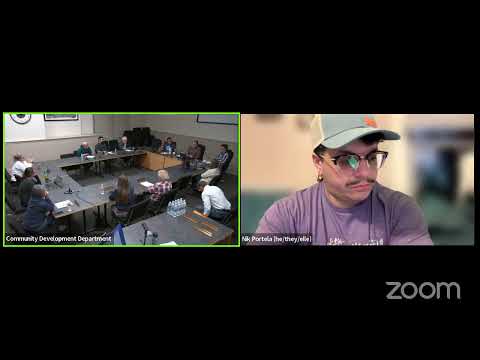
At a joint Planning Commission work session, city staff and Cascadia Partners consultants reviewed a draft 19‑action Housing Production Strategy and invited commissioner feedback on tools intended to increase housing supply over an eight‑year horizon.
Joshua Chandler of the city’s Community Development Department opened the discussion by framing the meeting as the third and final joint work session of the project. Lydia Ness, a senior associate with Cascadia Partners, summarized outreach and early findings and walked commissioners through the draft actions, which the team condensed from 27 earlier strategies to 19 in this draft.
Ness said the project conducted interviews, held a public forum and ran a virtual story map with a survey that drew 107 responses. “So far, we've had a 107 responses, which is great,” she said, and added that “over 70% of the respondents own their home,” a composition the team cautioned may skew some survey findings and that demographic cross‑tabulation of respondents is possible.
The draft strategy groups actions under partnerships, regulations, investments, incentives and land. Key items highlighted by the consultants included: adopting or exploring a state‑enabled multiunit property tax exemption (MUPTI) to replace the state vertical housing tax zone that will sunset in 2026; exploring a construction excise tax (CET) as a locally controlled revenue source for affordable housing; developing preapproved building plans (triplexes, fourplexes, cottage clusters and ADUs); and pursuing land banking with partner organizations such as the housing authority or community land trusts to acquire strategic sites.
Ness described MUPTI as “a 10 year partial exemption on property taxes” that cities can shape locally — setting eligibility, geographic scope and caps on approvals. Commissioners questioned whether the draft language should read “adopt” or “explore,” noting that state‑level or taxing‑district consent can limit local outcomes; consultants advised documenting the city’s efforts and said local customization is possible.
On a proposed construction excise tax, Ness explained statutory design options and exemptions: a city may tax permit valuations (residential up to 1% by statute) and can exempt affordable projects, accessory dwellings and nonprofit facilities. Commissioners raised concerns that an added tax on new residential construction could disincentivize building in a market with relatively low permit volumes. Consultants and commissioners referenced Hood River as a nearby example and recommended a third‑party feasibility study and market calibration before advancing a CET.
Several commissioners and advisory members voiced enthusiasm for lower‑burden actions such as preapproved plans and suggested prioritizing land banking earlier in implementation to preserve affordable sites. Consultants emphasized that no single tool will solve the problem: taken together and calibrated to local conditions, the suite of actions can generate modest local “gap” funds that help leverage larger state and federal financing.
Ness said the final draft will include a required section on equitable outcomes, an assessment of benefits and burdens, and implementation steps. The consultant team expects to complete a final draft by Dec. 15 and anticipates a City Council adoption hearing in early January 2025. Commissioners were invited to submit additional comments to staff before finalization.
The work session was informational and no formal actions or votes were taken on the draft strategy during the meeting.