Get Full Government Meeting Transcripts, Videos, & Alerts Forever!
Get email alerts on the Seawall Lot 337 topic
No spam. Unsubscribe anytime.
Developer representative warns Port that Seawall Lot 337 negotiations require a new RFP; staff outlines IFD-backed redevelopment plan
Summary
A developer representative told the Port Commission that the Seawall Lot 337 negotiation with a Giants-affiliated group materially deviated from its winning proposal and urged a new competitive process; staff separately described a large mixed‑use vision for Seawall Lot 337 and other waterfront sites using an infrastructure financing district (IFD) tool.
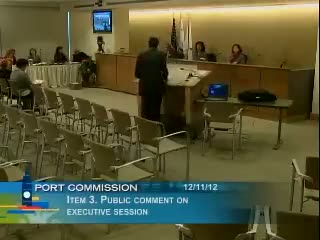
Victor Dela Cruz, speaking on behalf of a competing development company, told the Port Commission on Dec. 18 that the Port’s ongoing negotiations with Seawall Lot 337 Associates — an entity affiliated with the San Francisco Giants — involve a material change to the proposal that won the competition and require a new solicitation.
"Almost all of the equity, all of the experience, and all of the development capability in the SWL 337 Associates team's proposal was the Cordish Companies, yet they appear to be out of the picture now," Dela Cruz said, arguing that the remaining proposal is "little but a huge empty shell" that bears "no similarity to the original" and that, under state law and the city's administrative code, the Port must reopen competition if the principal development partner changes.
Dela Cruz warned commissioners that continuing to negotiate would give the Giants "an unseemly financial windfall for public trust property," and urged the commission to reissue the RFP so that the Port can "vet any new developer that is going to now primarily be responsible for this project." He did not identify a requested remedy beyond reissuing the RFP.
Port staff later placed Seawall Lot 337 in a broader policy discussion about creating an Infrastructure Financing District (IFD) that would capture new tax increment on port property to fund large waterfront infrastructure projects. Elaine Forbes, the Port’s CFO, and Brad Benson, special projects manager, described the proposed policy as a two‑step process (intent to form an IFD, then adoption of an infrastructure financing plan for specific project areas) with CEQA and fiscal feasibility reviews required before any district proceeds are spent.
Staff said the Seawall Lot 337 concept being negotiated could accommodate as much as 3.5 million square feet of mixed-use development, including up to 1,000 residential units, roughly 1.7 million square feet of office, 2,800–3,000 parking spaces and more than eight acres of parks; staff estimated infrastructure needs for Pier 48/Seawall Lot 337 at “over $200 million” in 2012 dollars. Port staff framed the IFD as a way to pay for that infrastructure while preserving the Port’s capital resources and providing fiscal analysis to ensure the city’s general fund is made whole over time.
The commission did not take a formal action on reissuing any RFP at the meeting. Commissioners asked staff to continue with the IFD policy process — including review by the City’s Capital Planning Committee and, later, the Board of Supervisors — before any individual IFD plan or project term sheet is submitted for approval.
What happens next
Port staff plans further fiscal and environmental analyses before any IFD appendix or term sheet is advanced to the Board of Supervisors. The Seawall Lot 337 concept remains in exclusive negotiations with the Giants‑affiliated team; the public comment from Dela Cruz requests that the Port evaluate whether that team still satisfies the procurement basis of the earlier award.
Why it matters
Seawall Lot 337 is adjacent to Mission Bay and the Port’s decisions about procurement and infrastructure financing could shape a major new neighborhood and affect millions of dollars in public infrastructure spending. The dispute flagged at the meeting highlights how partnerships and team composition in public‑private developments can trigger procurement obligations and public scrutiny.