Get Full Government Meeting Transcripts, Videos, & Alerts Forever!
Get email alerts on the Police Reform topic
No spam. Unsubscribe anytime.
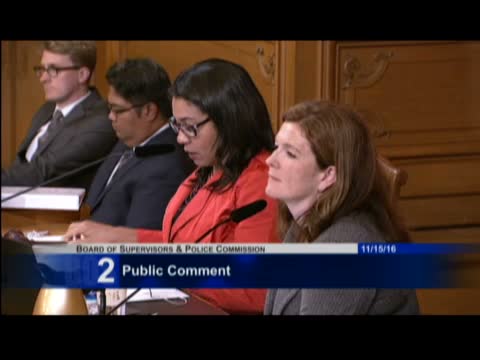
San Francisco officials outline plan to implement DOJ policing recommendations; community urges faster action and independent oversight
Summary
City officials told a joint Board of Supervisors and Police Commission hearing that the SFPD will implement recommendations from a Department of Justice assessment using an integrated project matrix, new data tools and verification sign-offs; community speakers urged faster timelines, independent investigations and robust data auditing.
San Francisco supervisors and members of the Police Commission heard a progress report on the Department of Justice collaborative assessment of the San Francisco Police Department and an outline of how the city plans to implement its recommendations.
Supervisor Jane Cohen opened the Nov. 13 joint hearing and said the goal was to move beyond fact-finding to implementation with firm timelines. The hearing brought together the mayorCFS office, the SFPD, the Police Commission and community groups to review "how the recommendations for change will be implemented," she said.
On behalf of Mayor Ed Lee, Diana Oliva Rocha, director and senior adviser in the mayorCFS office, said the mayor "accepted and promised to implement every single recommendation" from the DOJ-led assessment and related reviews. Rocha cited a $20,000,000 city investment to expand training, buy equipment and improve cultural-sensitivity programs.
Interim Chief Tony Chaplin and Captain Michael Connolly of the Professional Standards and Principal Policing Bureau presented the departmentCFS operational plan. Connolly said the department had integrated ten prior reviews into a single project-management matrix that assigns executive sponsors (deputy chiefs) and project teams to the recommendations. Connolly described a verification and sign-off process that moves completed work through professional standards to the chief and the mayorCFS office for final approval.
Connolly summarized reforms already underway, including reengineered firearms and de-escalation training, expanded crisis intervention team (CIT) protocols and the near-term deployment of body-worn cameras. He said 9 of the 10 district stations would be fully outfitted by the end of that week, with full patrol deployment planned to begin in January 2017.
On data and reporting, Connolly described a new smartphone application piloted at Southern Station to capture demographic and use-of-force data required by city ordinance 96a (and potentially by California Assembly Bill 953). The department acknowledged past reporting delays were caused by manual collection and verification; automation and outside academic review are planned but will require time and procurement. "We just deployed this application through Southern Station two weeks ago," Connolly said.
Chaplin and Connolly emphasized accountability and verification. Connolly said the team found 94 DOJ findings and 272 associated DOJ recommendations and that, when integrated with other reviews, the matrix included roughly 479 recommendations that would be triaged by priority. He described a sign-off sheet and multi-level review to document implementation.
Supervisors and commissioners pressed for specifics. Supervisor Cohen asked why negotiator call-outs increased by about 50 percent year over year; Connolly cited a mix of societal factors and a shift toward calling crisis and mental-health specialists earlier. Supervisors also asked how negotiators are selected (Connolly said it's a tested position governed by California POST requirements), how the department will change culture, and how the city will recruit more officers of color and women.
Several supervisors, including Supervisor Aaron Peskin and Commissioner DeJesus, pressed on who will perform independent investigations into officer-involved incidents if the department does not investigate itself. Chief Chaplin said the mayor had funded positions for an independent investigations bureau within the District AttorneyCFS office and that a memorandum of understanding was in final negotiation; he estimated hiring and finalizing the MOU in the coming weeks.
Community members who spoke during public comment repeatedly urged faster and more transparent implementation. Felicia Jones of Justice for Mario Woods listed community losses by name and said training captains and lieutenants alone was insufficient without stronger discipline and independent oversight. An attorney and community groups called for an independent audit of police data and said academic partners alone may not be enough; others urged contracting with audit firms experienced in policing datasets.
Youth commissioners and student speakers urged that reforms include concrete training and implementation in schools, and repeated calls that SFPD-school district memoranda of understanding be enforced. Multiple speakers criticized the Police Officers AssociationCFS political activity and influence and urged broader stakeholder involvement in implementation, including civil-rights and bar associations.
The hearing closed with supervisors and commissioners thanking participants and noting next steps: ongoing verification of implementation, an expected status update from executive sponsors within weeks, and a follow-up hearing scheduled for February 2017. Officers were expected to be equipped with body-worn cameras citywide by January 2017, and the department plans to continue rolling out training and data systems.
What remains open: the timing of a citywide procurement to select outside academic or audit partners, the final content and timeline of the MOU for an independent investigations bureau, and a public schedule for the departmentCFS reporting back on prioritized recommendations.