Get Full Government Meeting Transcripts, Videos, & Alerts Forever!
Get email alerts on the Civic Governance topic
No spam. Unsubscribe anytime.
Commissioners assign reform clusters, schedule mental-health hearing; public commenters press OCC accountability
Summary
Rania Adwan presented commission cluster assignments for DOJ-recommended reforms; Commissioner Mazuko urged a February hearing with health agencies on mental-health calls; public comment included calls for stronger OCC oversight and support for a Safe Place program.
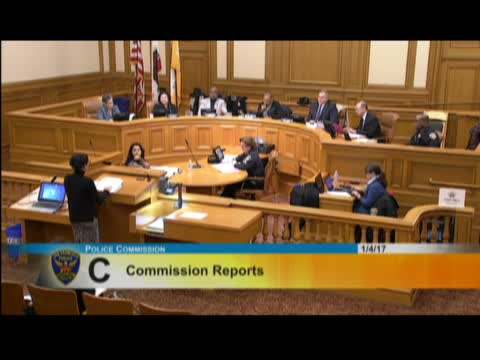
The Police Commission used its Jan. 4 meeting to assign commissioners to lead clusters of DOJ-recommended reforms, schedule follow-ups and hear extended public comment.
Senior policy analyst Rania Adwan presented a proposed clustering of 18 DOJ recommendations into 11 work streams and asked commissioners to volunteer as leads for each cluster. The clusters range from community engagement and audit reporting to use-of-force policy review; Adwan said commissioners will be expected to present periodic updates on their assigned topics.
Commissioner Mazuko pressed for a focused hearing on mental-health response, saying an overwhelming majority of police encounters involve people in mental-health crisis and urging a February presentation that would include the Department of Public Health and San Francisco General Hospital medical staff. "This is probably the most important issue we're going to deal with this year," he said, requesting interagency participation and community input.
Public comment occupied a substantial portion of the meeting. Several speakers criticized the OCC as insufficiently aggressive on serious misconduct allegations. Jackie Barshak (San Franciscans for Police Accountability) told the commission the OCC is a "toothless watchdog" and alleged the office prioritizes statistics and deadlines over systemic change. Others, including Karen Fleischman and Barbara Tard, echoed concerns about low sustained rates for biased-policing complaints and the need for full investigative training and procedures.
Community members also proposed specific initiatives: Helena Brooke of the Mental Health Advisory Board urged commission support for a "Safe Place" program that would designate businesses as immediate safe havens for people who feel threatened and coordinate community outreach and signage. Commissioners asked staff to coordinate scheduling for the Safe Place discussion and to identify a staff point person.
On procedural business, the commission agreed to carry the awards-committee item to a later meeting to allow staff to vet names against pending internal-affairs cases. The commission unanimously voted to hold a later agenda item (7) in closed session and then unanimously approved non-disclosure of that closed-session discussion. The meeting adjourned in memory of Dennis Cashman.
Follow-ups requested at the meeting include scheduling the mental-health hearing and returning with budget and implementation details for OCC recommendations.