Lifetime Citizen Portal Access — AI Briefings, Alerts & Unlimited Follows
PUC updates SSIP progress; triple-bottom-line tool used to guide alternatives
Loading...
Summary
SFPUC reported SSIP phase 1 covers 70 projects worth $2.9 billion, is ~22.6% complete with $582 million spent, and staff described a city-custom triple-bottom-line (social, environmental, financial) evaluation to compare alternatives and inform project choices.
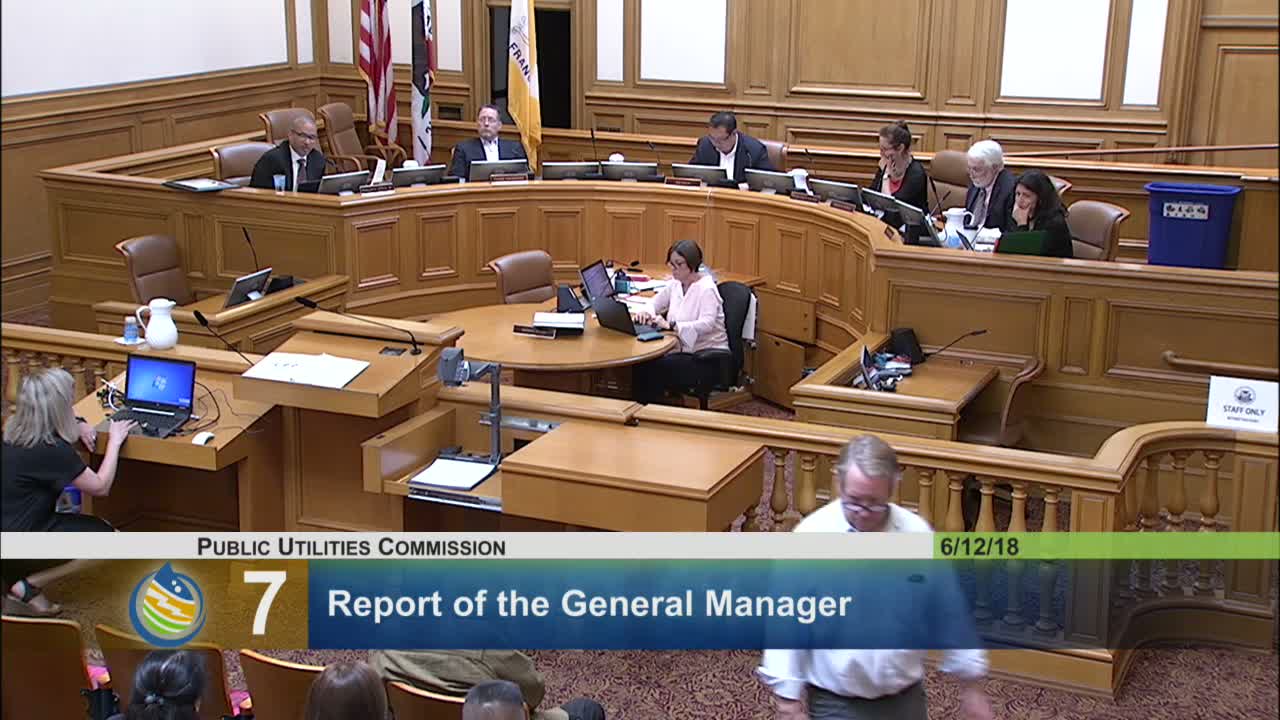
At its June 12 meeting the San Francisco Public Utilities Commission received a quarterly Source System Improvement Program (SSIP) update from Karen Kubik, director of the wastewater capital program, who described program status, scheduling milestones and the commission's customized triple-bottom-line (TBL) evaluation used to compare alternatives.
Kubik said phase 1 comprises 70 projects with $2.9 billion authorized, roughly 22.6% complete and $582 million expended to date. HeadWorks is in construction, and biosolids is moving through procurement and toward 95% design by November; the project team reported early construction packages would go to bid for solar replacement, demolition and utility work.
The commission discussed the TBL approach, which scores alternatives across social, environmental and financial criteria and produces outputs used to explain why a preferred alternative was recommended. Kubik and staff said project managers enter inputs into an Excel-based format tied to the city's policy objectives and that archival records of each project's TBL analyses are stored on the SFPUC SharePoint site for transparency. Commissioners asked staff to provide a compiled, public-friendly explanation of how TBL influenced prior decisions and recommended pulling pros/cons for each alternative into the project record.
Kubik also noted workforce numbers on prime contracts (staff cited local-hire share ~32% for San Francisco residents) and said the program is shifting outreach from program-level to project-level. Commissioners encouraged staff to distill the TBL outputs into communications materials for the public and to consider monetizing some nonfinancial benefits cautiously; staff said they are exploring software and careful metrics to avoid letting monetization override judgment.
Kubik's remarks included a personal note: she said this was her last in-person commission meeting after nine years; commissioners publicly thanked her for her leadership.
Next steps: staff will continue completing 95% designs for major projects, integrate TBL results into quarterly reports and provide a format for presenting TBL outputs and the documentation of decision factors to the commission and the public.