Get Full Government Meeting Transcripts, Videos, & Alerts Forever!
Get email alerts on the Green Infrastructure topic
No spam. Unsubscribe anytime.
SFPUC monitoring shows green infrastructure outperformed models, staff says
Summary
SFPUC staff reported that monitored early-implementation green infrastructure projects removed far more stormwater than models predicted — in some cases reducing runoff by more than 80% in monitored drainage areas — and proposed programmatic changes and grant tools to scale maintenance and workforce programs.
San Francisco Public Utilities Commission staff told commissioners June 12 that the commission's early-implementation green infrastructure projects are performing better than expected, and said the results will shape design, maintenance and grant strategies going forward.
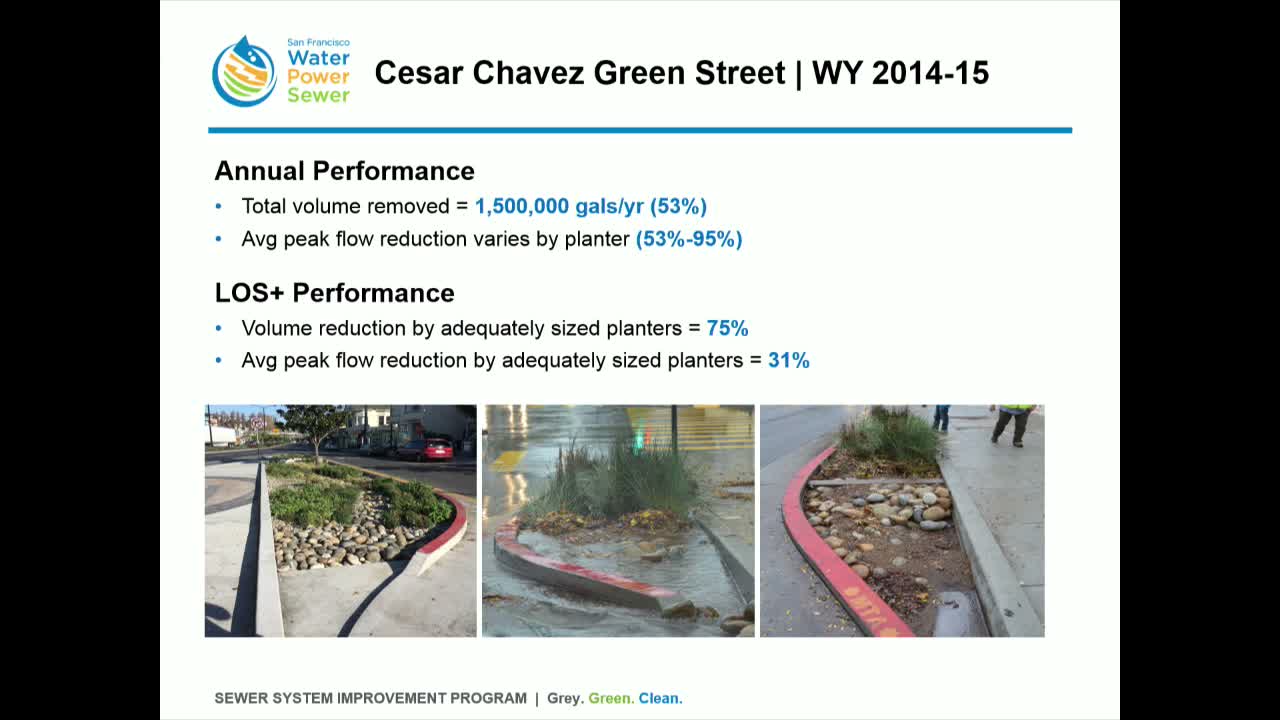
Polly Perkins and monitoring staff presented two years of measurements from the Fell/Oak and Sunset project areas and opportunistic results from the Cesar Chavez pilot. Staff said Cesar Chavez reduced about 1,500,000 gallons of stormwater per year. For Fell/Oak, monitored bioretention planters removed about 85% of the stormwater that fell in the drainage management area; a level-of-service storm was reduced by about 86%. Staff reported the Sunset monitored block infiltrated roughly 93% of the stormwater flowing to it during the 2016'17 rainy season.
Staff attributed the measured outperformance primarily to higher-than-expected infiltration rates and lateral subsurface flow at some sites, and noted variability by soil type: the Panhandle'area soils produced particularly strong infiltration, while sandy soils on the West Side showed smaller differences between model and measurement. The monitoring team described a strategy of combining direct measurements with calibrated models to estimate volume and peak-flow reductions and said it will continue monitoring additional sites (Mission Valencia, Holloway, Sunnydale and further Sunset phases) over coming winters.
In a separate lessons-learned presentation, staff recommended new program measures: adopt cost-effectiveness screening metrics (minimum drainage management area, maximum cost per gallon removed, maximum cost per acre managed), use advanced utility locating earlier in design, pursue a programmatic grant and "streetscape synergy" approach to leverage public and private parcel opportunities, and standardize green infrastructure delivery processes (staff said a 65% design checklist has been developed).
Commissioners pressed staff for clarity on two practical points: (1) how much water entering the facilities is being captured versus bypassing in extreme storms, and (2) how maintenance will be funded and performed. Staff said they perform post-construction flow testing to confirm substantial inflow to bioretention cells and are piloting an in-house green infrastructure maintenance crew while using job-order contracts during the transition. Staff also described an NGICP training pilot to build inspection and maintenance capacity across the industry.
Members of the public and contractors at the meeting urged stronger community inclusion in early workforce training and contractor workshops, local sourcing of materials where feasible, and certification or follow-up for training participants. Commissioners asked staff to incorporate workforce and equity criteria into future grant design and to return with implementation details.
Next steps: staff said all monitoring reports and data will be posted on the SFPUC website and that findings will be shared at national green infrastructure conferences and uploaded to an international BMP database. Commissioners and staff agreed to continue refining design standards and to report back on grant and maintenance proposals.