Get Full Government Meeting Transcripts, Videos, & Alerts Forever!
Get email alerts on the Harbor Finance topic
No spam. Unsubscribe anytime.
Port staff proposes phased rate increases for South Beach Harbor as tenants push for more outreach and alternatives
Summary
Port staff reported an approximate $800,000 operating shortfall at South Beach Harbor and proposed a three‑year phased move toward rate parity with San Francisco Marina, changes to parking policy and an electricity surcharge; tenants and community groups pushed back, calling for more time, outreach and alternatives to large immediate increases.
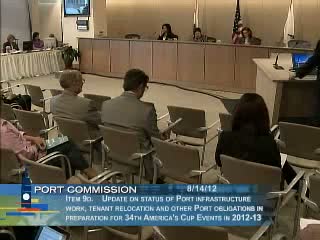
Port staff presented a detailed update on South Beach Harbor operations, finances and a set of proposed changes intended to address an estimated operating shortfall of roughly $800,000 for the coming fiscal year.
Peter Dailey, Deputy Director of Maritime, said the Port inherited the harbor when the redevelopment agency dissolved and that staff are still analyzing the finances. He told the Commission the harbor’s construction was financed by approximately $24 million in revenue bonds and an $8 million loan from the State Department of Boating and Waterways and that about $13 million remains outstanding on that debt. Dailey said a 1984 BCDC permit requires roughly $10 million in apron and access improvements that are currently unfunded. “Without any increases or further reductions in expenses, the harbor can expect an approximate deficit of about $800,000 in this coming year,” he said.
To address the gap staff proposed a three‑year phased approach to raise rates toward parity with San Francisco Marina, a $75 annual waiting‑list fee, a second parking‑pass fee of $600 per year, and temporarily levying an electricity surcharge of $0.54 per linear foot per month until individual meters can be installed. Staff also proposed prioritizing meter installation in the next fiscal year to allow an offset to the surcharge.
The proposal drew sustained public comment from tenants, the Advocates for South Beach Harbor, the South Beach Yacht Club and nonprofit groups. Tenants expressed concern that proposed increases — which some speakers characterized as 35–43% — would displace middle‑income and fixed‑income residents. “43% increase is a lot,” said tenant Ken Geiser. Jess Ramos, a long‑time slipholder, warned the adjustments “will make South Beach Harbor 1 of the most expensive marinas, probably the most expensive municipal marina in the San Francisco Bay Area.” Many speakers urged the Port to extend its timeline, improve direct outreach (mailings, phone calls and a separate mailing beyond a bill insert) and negotiate parking permit transferability and partner accommodations.
Port staff acknowledged shortcomings in outreach and committed to additional tenant contact, a town hall meeting in the weeks ahead (staff targeted the first week after Labor Day) and a special tenant mailing. Staff also said legal limits from the city attorney constrain automatic release of tenant mailing lists but that Port staff will work with stakeholders to improve notification. Elaine Forbes, Deputy Director of Finance Administration, told the Commission the coverage requirement for the harbor’s revenue bonds is 1.3 times net revenues and that staff are working with the Office of Public Finance and the redevelopment successor agency to clarify how those definitions apply.
Several tenant speakers urged alternative revenue approaches, including monetizing guest berths, examining charter/drop‑off fees at Pier 40, pursuing grants or renegotiating loan terms, exploring solar or other renewable energy opportunities and creating a special fund to keep net revenues in the harbor when feasible. Staff said some near‑term low‑hanging items (waitlist fees and guest berth fees) could generate revenue, and emphasized the Port has no extra general‑fund support available to cover the current shortfall.
Next steps: staff will expand outreach, schedule a town hall meeting, continue financial analysis, produce additional briefings in September, and return with concrete proposals after stakeholder engagement. Any final rate increases would be phased and implemented after additional public dialogue and Commission consideration.