Get Full Government Meeting Transcripts, Videos, & Alerts Forever!
Get email alerts on the Development Seawall 351 topic
No spam. Unsubscribe anytime.
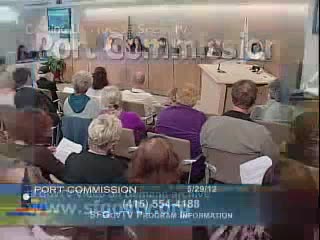
Port Commission approves '8 Washington' waterfront development, adopts CEQA findings
Summary
The San Francisco Port Commission adopted CEQA findings and approved transaction documents for the Seawall Lot 351 “8 Washington” project, clearing the way for a mixed-use development with new parks, underground parking and payments to the city; the vote followed extensive public comment and competing views on public trust and neighborhood impacts.
The San Francisco Port Commission voted to approve the CEQA findings and a package of transaction documents for the Seawall Lot 351 development known as “8 Washington,” moving forward a mixed‑use project that staff says will add public open space, underground parking and housing to the Ferry Building waterfront.
Phil Williamson, the port’s project manager, told commissioners the resolution authorizes the mitigation, monitoring and reporting program (MMRP) and the major transaction documents — the disposition and development agreement (DDA), lease L-15110 (66 years), purchase and sale agreement (PSA), and a trust‑exchange agreement with the California State Lands Commission. Williamson said the trust‑exchange involves removing the public trust from roughly 23,000 square feet of the lot and imposing the trust on about 28,000 square feet elsewhere on the site, and that independent appraisals value the termination parcel at more than $7,500,000 and the incoming trust parcel at more than $8,600,000.
Williamson described the financial terms in detail: the port will receive a $3,000,000 land payment upon project stabilization (staff estimated stabilization in March 2016), annual construction‑period rent of $60,000 and a 66‑year ground lease for a roughly 4,000‑square‑foot trust retail parcel intended for restaurant or incidental recreation use. The developer also agreed to pay the port $120,000 per year during construction and to provide transfer payments equal to 1% of certain condominium resale proceeds as described in the PSA. Staff said the project will provide 134 residential units (down from 145 in an earlier variant) and identified $8,600,000 in an in‑lieu fee to the mayor’s Office of Housing plus a separate $2,200,000 contribution described by staff as additional funding for housing.
Parking and public access were central to discussion. Staff presented an underground garage with up to 389 spaces — up to 255 public spaces (of which up to 175 would be reserved to serve the Ferry Building area) and up to 127 residential spaces — and said the project includes new parks, enhanced pedestrian connections and 161 bicycle parking spaces.
The commission heard extended public comment. Supporters — including unions, design professionals and business groups — argued the project replaces a fenced tennis club and surface lot with public amenities, revenue to the port and new housing. “It will complete the frame around the Ferry Building and provide much‑needed parking and park space,” said architect Janine Moss. Opponents warned of loss of an existing community resource and raised public‑trust and process concerns. “The public has spoken very loud and clear,” said Janet Lautenberger of Friends of Fogg, urging the commission to reject the project; others alleged the approval was a foregone conclusion and pressed for stronger, binding guarantees on parking and amenities.
Commissioners acknowledged the length of the review process and competing views but said staff had substantially revised the project and negotiated protections and public benefits. After motions and a voice vote, the commission passed the port resolutions approving the CEQA findings and the transaction documents.
What happens next: staff said several further approvals are required before conveyance or construction can begin, including the State Lands Commission’s approval of the trust exchange, Board of Supervisors actions on transactional documents, and issuance of building and encroachment permits. The project’s schedule presented to the commission anticipated execution of the DDA in summer, close of escrow in the fall, construction start in spring and public improvements completed by October 2015 under staff’s timeline assumptions.
Actions: The commission approved Resolution Nos. 12‑46 and 12‑47 (CEQA findings, MMRP and transaction documents). Vote tallies were taken by voice; no roll‑call tally was provided in the public record presented at the hearing.
Sources: Staff presentation by Phil Williamson and public comment at the Port Commission hearing.