Get Full Government Meeting Transcripts, Videos, & Alerts Forever!
Get email alerts on the Oversight Office Report topic
No spam. Unsubscribe anytime.
OCC reports 301 cases opened; urges transparency as staffing and budget increase
Summary
Joyce Hicks, director of the Office of Citizen Complaints, told the Police Commission the OCC opened 301 and closed 297 cases through Q2 2016, is investigating four fatal officer‑involved shootings, and will expand staffing after a nearly $2 million budget increase for FY2016–17.
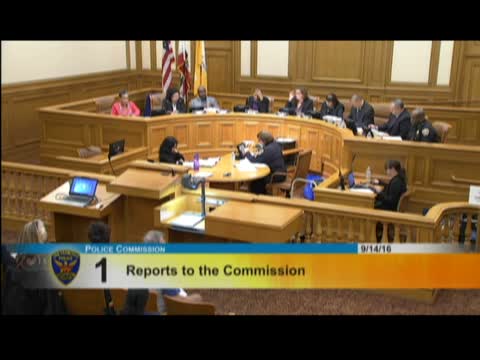
Joyce Hicks, director of the Office of Citizen Complaints, told the San Francisco Police Commission on Sept. 14 that the OCC combined its first‑ and second‑quarter reports and is prioritizing transparency even as it handles an unusually large caseload.
"By the end of the second quarter, the OCC had opened 301 cases and closed 297," Hicks said, adding that the office was investigating four fatal officer‑involved shootings simultaneously — the largest number of fatal OIS cases the OCC has had at one time.
The OCC reported a sustained‑finding rate of about 10 percent and a mediation rate near 9 percent for the reporting period. Hicks said the commission, the mayor and the Board of Supervisors provided budget enhancements that raised the OCC’s FY2016–17 budget to $7.7 million, which will allow staffing to increase from 39 to 44 positions beginning Oct. 1.
Commissioners pressed Hicks about what happens when the OCC and the police chief disagree on discipline for sustained cases. Commissioner Wong asked whether the OCC can bring cases to the commission when the chief’s discipline is below the 10‑day threshold that traditionally triggers commission review. Hicks said the OCC has not routinely elevated sub‑10‑day disagreements but that when she deems a case commission‑level she signs charges herself.
"Should I determine that a case is commission level and the chief disagrees, then I sign the charges myself," Hicks said, describing the OCC’s evolving practice. Commissioners asked staff to study whether the charter, rules or processes should be clarified so the commission can better address recurring disagreements on discipline.
Hicks also described the OCC’s participation in the Prop D effort to clarify OCC jurisdiction over officer‑involved shootings and its work with DOJ and the COPS Office as part of collaborative reform. She said the grand jury’s recommendation that the OCC receive transcription funding has been acted on: with commission and mayoral help, the OCC now has funding to transcribe interviews.
The commission requested a deeper look at how often the OCC’s recommended discipline diverges from the chief’s final sanction and whether changes are needed to ensure consistent treatment of misconduct across different entry paths (OCC complaints vs. internal affairs). The commission will receive monthly statistical reports and will follow up on any procedural changes recommended by staff after study.