Get Full Government Meeting Transcripts, Videos, & Alerts Forever!
Get email alerts on the Bike Lanes topic
No spam. Unsubscribe anytime.
Keene committee backs drafting downtown protected bike-lane ordinance
Summary
The Keene MSFI committee voted to recommend that the city manager draft an ordinance establishing rules for protected downtown bike lanes, after staff described design-focused safety measures, statutory constraints on e-bikes and calls for local speed testing and community outreach.
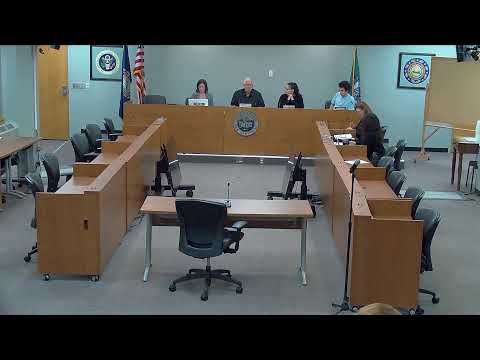
The Keene Municipal Services, Facilities & Infrastructure Committee voted to recommend that the city manager submit a proposed ordinance establishing rules for bicycle operation in the downtown core.
City Manager presented the bike-lane policy committee's work, saying “protected bike lanes physically separate cyclists from vehicle traffic, significantly reducing the risk of collision,” and laid out design elements intended to slow users, including frequent stops, surface changes, tighter turns and raised crosswalks. The manager also described existing state authority and local code, providing a handout of state bike laws and noting chapter 94 of the city’s ordinances that addresses sidewalk bicycle prohibitions.
Committee members and the public focused on enforceability, the role of e-bikes and the need for local testing. The city attorney said statutory enforcement for any new bike ordinance is at the violation level rather than a misdemeanor and that the statute includes a mechanism allowing officials to take a bike in certain cases. Several speakers urged design and education over heavier police enforcement.
Jay Khan, a member of the bike-lane task group, told the committee the group gave “really good consideration to multiple perspectives” and urged local experiments and evidence-gathering on speeds so the ordinance could include data-driven guidance. Sam Jackson, chair of the Bicycle Pedestrian Advisory Committee, suggested aligning automobile speed limits — “If we dropped the Main Street speed limit for automobiles down to 20 miles an hour, then it matches the cap of e-bikes,” he said — as one way to reduce conflicts and improve perceived safety.
Public commenters on the committee and BPAC urged designs that avoid constant sharp turns and very short interrupted segments, noting that European bike paths tend to be longer and gently curved. Autumn Delacroix, a BPAC member, said such interruptions would prevent riders from reaching high speeds in the short downtown segments.
After discussion, a councilor moved to recommend that the city manager draft an ordinance and forward it to the Planning, Licenses and Development (PLD) committee for consideration. The motion was approved by the committee (reported vote: 4–0). The MSFI chair noted the need for outreach and education and said numeric speed guidance and enforcement specifics would be refined as the ordinance is drafted and reviewed by PLD.
The MSFI committee’s recommendation does not itself adopt regulatory text; it sends the proposal to PLD for ordinance drafting and further technical review. The city manager and staff signaled they plan public engagement, testing and continued coordination with BPAC and other community partners as the process continues.
The committee expected to return ordinance language and design details for additional committee and public review as the downtown project proceeds.