Get Full Government Meeting Transcripts, Videos, & Alerts Forever!
Get email alerts on the Water Infrastructure topic
No spam. Unsubscribe anytime.
Saint Paul utility proposes higher capital spending, small customer rate hike and new low-income assistance fund
Summary
Saint Paul Regional Water Services presented a budget that boosts capital investment to address aging mains and treatment-plant rebuilds, proposes a 9.5% rate increase (about $3.12/month) and would dedicate 0.5% of water revenue to a Waterworks low-income assistance fund, supplemented by lease and grant revenue.
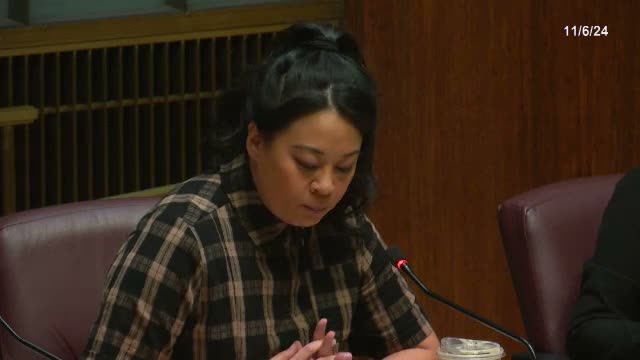
Raquel Vaske, general manager of Saint Paul Regional Water Services, told the City Council during a budget work session that the utility needs to raise rates modestly and shift more money into capital projects to address aging mains and replace lead service lines.
Vaske said two large projects anchor the proposal: a full lead-service-line replacement program and a multi-year rebuild of two-thirds of the McCarran treatment plant. She told members the lead program represents roughly $35,000,000 of funding in the proposal but that the utility has obtained state grant support for that effort, which Vaske said carries no direct rate impact for customers.
The utility’s proposed budget includes a 9.5% increase to both the consumption fee and base fee, which Vaske said equates to about $3.12 per month for a typical customer. She framed that increase as necessary to fund operating-cost pressures — chiefly negotiated salary and fringe increases, certification and incentive pays, and rising chemical costs — and to increase annual capital investment from about $23.7 million toward a $28 million level with a long-term goal near $40 million per year.
Vaske described a newly reworked 10-year asset-management plan that identifies mains, pump stations and other long-lived assets project-by-project rather than by broad buckets. The utility modeled several implementation scenarios and chose a compromise that balances rate impacts and cash-on-hand rather than pursuing the most aggressive accelerated replacement schedule, which the presentation showed would have required larger rate spikes.
On equity and customer relief, Vaske proposed a redesigned Waterworks low-income assistance program. Historically the utility put between $5,000 and $50,000 into the program and offered up to $300 per customer; the federal LIHWAP infusion in 2023 allowed many more customers to use assistance. Because federal support has ended, Vaske proposed dedicating 0.5% of water revenue to the Waterworks program (projected at roughly $375,000 in the budget proposal) so the utility can offer year-round, consistent assistance and avoid front-loading support that left households without help later in the year.
Vaske also said the utility would commit to stopping water shutoffs 'as long as the data continues to support that decision.' She argued shutoffs damage public trust, place residents at risk and incur an estimated $1 million in reactive costs each year; the Waterworks fund and outreach are intended to reduce reliance on shutoffs.
Council members focused questions on funding sources, the proposed balance of cash versus debt financing and the timing of meter replacements that would enable monthly billing in the future. Vaske said sale-of-water revenue, base fees and a water-main surcharge are the primary controllable funding buckets; miscellaneous revenues and state grants — including a $35 million state grant for the lead program — make up other categories. She said the utility intends to use debt primarily for very large assets such as the treatment plant and to avoid routine debt issuance for ongoing main replacements when possible.
The utility is also budgeting a $120,000 consultant study to update rate design as part of affordability work, and plans a mid-January launch for a new customer portal and a multi-year meter-replacement program affecting 96,000 meters over about seven years.
The presentation ended with Vaske requesting council support for the higher capital investment trajectory and assistance promoting the Waterworks program to constituents as the budget moves through council deliberations.