Get Full Government Meeting Transcripts, Videos, & Alerts Forever!
Get email alerts on the Urban Renewal Maximum Indebtedness topic
No spam. Unsubscribe anytime.
Urban renewal agency to seek $6.1 million boost to maximum indebtedness to finish First Street and fund rehab grants
Summary
Agency staff proposed increasing the Columbia Gateway Urban Renewal Agency's maximum indebtedness by $6.1 million to cover a $7 million First Street project and to preserve roughly $5.1 million for private property rehabilitation grants; staff outlined a timeline for formal notice, taxing-district comment, and city council consideration.
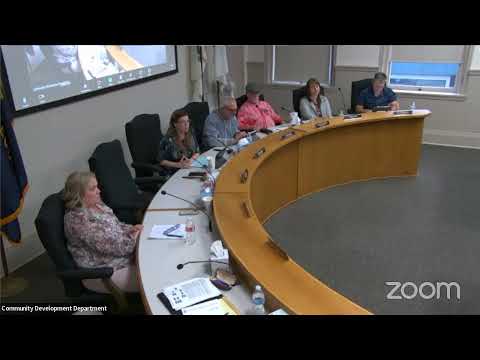
Director Josh Chandler, the agency's director, told the Columbia Gateway Urban Renewal Agency board on Sept. 17 that staff will present a draft substantial amendment that would increase the district's maximum indebtedness (MI) by $6,100,000 to address a shortfall on the First Street project and maintain funding for private property rehabilitation grants.
Chandler said the agency currently has $2,200,000 of spending authority available and that the proposed MI increase would effectively raise capacity to about $8,300,000. "The increase in MI would then leave us a balance of $5,100,000," he said, describing how the agency's $3.8 million set-aside in Fund 18 for First Street and the project's $7 million price tag create a funding gap.
Why it matters: the agency said the MI change would allow it to finish First Street's repairs and still invest in a set of downtown private projects intended to expand the tax base and eliminate blight. Staff said the change would not extend the district's scheduled termination in 2029 but would increase the total dollars taxed under the TIF arrangement.
Chandler outlined how the $7 million First Street estimate breaks down: approximately $4.8 million in construction-related material and work and, separately, an engineering estimate that put the infrastructure portion at roughly $700,000. He said some items currently described as "streetscaping" include elements (bridges, micropiles) that could plausibly be classified as infrastructure and that staff will refine those distinctions in the fiscal analysis.
Staff recommended contracting Lane Howard Consulting to complete the detailed fiscal reconciliation and project cost-tightening; Chandler said that contract scope is priced at $37,374 and that the agency has sufficient resources to cover the work. "We need the real information to you and what exactly it's going to look like," he said.
Process and next steps: staff said the agency will present an initial draft of the substantial amendment at its Oct. 15 meeting, then send formal consulting-and-confer letters to taxing districts. The statutory comment period for taxing districts is 45 days; staff said the 45 days would run after the formal notification (likely mid-October). Planning commission review is scheduled for early November, the agency would review a revised project list Nov. 19, and staff plan to bring an ordinance and the substantial amendment to city council on Dec. 9, with an optional Jan. 13 meeting if council requests more time.
Taxing-district impact: Elaine Howard, who joined the meeting as a consultant, warned that the $6.1 million increase would require additional dollars from taxing districts (city, county, fire district). "That $6,100,000 has to come from somebody and it comes from all the taxing districts," she said, adding that city council is required to accept, reject or modify written recommendations from taxing districts when considering an ordinance.
Dissent and priorities: several board members questioned whether the agency should prioritize safety-critical work (for example, replacing a 150-year-old water main) over more aesthetic streetscape elements, and asked staff to clarify what the city's public-works department will pay for versus what the agency would fund. Chandler acknowledged reluctance in some city departments to fund parts of the project and said staff will pursue further conversations with the city manager and public-works director before finalizing the scope.
What was not decided: the meeting did not include a formal vote to increase MI; the board previously gave staff consensus to explore the option and staff will return with a draft substantial amendment, refined cost breakdowns and a consultant's report.
The agency plans to seek public comment and taxing-district input before sending an ordinance to city council for adoption.