Get Full Government Meeting Transcripts, Videos, & Alerts Forever!
Get email alerts on the Environment topic
No spam. Unsubscribe anytime.
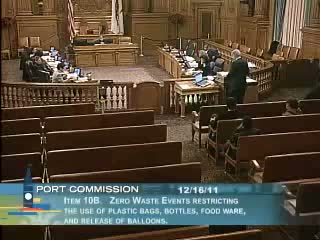
Port staff previews 'zero waste' events policy to curb single-use plastics at large waterfront events
Summary
Port staff presented a proposed policy requiring event sponsors for large waterfront events to prohibit single-use plastic bottles and bags, require compostable foodware, and ban intentional balloon releases; staff asked for feedback before returning with an action item.
Port staff presented a proposed "zero waste" events policy that would apply to real-property agreements (licenses or leases) for events with an aggregate attendance of 15,000 or more. The policy would prohibit sale or distribution of single-use plastic bottles and single-use plastic bags, require compostable food service ware and prohibit intentional mass release of balloons in connection with events at port property.
Rich Berman of port staff introduced the measure and said it aims to reduce plastic pollution in the Bay and improve waste diversion for major events. Alex Dimitri of the San Francisco Department of Environment spoke in favor and framed the policy as a source-reduction step within the standard waste hierarchy (reduce, reuse, recycle). Environmental advocates and community groups praised the proposal and urged lower thresholds for coverage and robust measures for compliance and monitoring.
Public commenters including representatives of Clean Water Action and local yacht clubs urged the Port to adopt the policy citywide or to apply it at smaller events; a private vendor with a bottleless-water business highlighted alternatives and urged wider adoption. Commissioners asked staff to refine the proposed threshold (aggregate attendance) and to return with implementation and enforcement proposals, including options such as security-deposit forfeiture, licensing conditions and a vendor-sourcing guide to make compliance practical.