Get Full Government Meeting Transcripts, Videos, & Alerts Forever!
Get email alerts on the Americas Cup topic
No spam. Unsubscribe anytime.
Port staff outlines America's Cup approvals, venues and transportation plans; CEQA and federal permits to follow
Summary
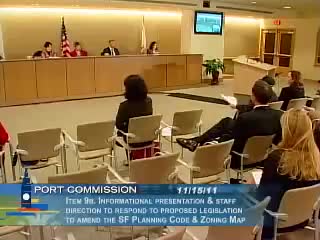
Port staff briefed the commission on the America's Cup (AC34) approvals pathway, described temporary venue layouts (Marina Green, Crissy Field, Piers 27–32) and the 'people plan' for transit, bicycles and crowd management; staff said CEQA/NEPA review and multiple federal and regional permits remain to be secured.
Port special-projects staff told the commission that the America's Cup effort will require an extensive set of coordinated approvals and temporary-venue arrangements, and that the draft environmental review and plans for transportation and event management will guide mitigation.
Brad Benson said the port expects a compressed approvals timeline tied to CEQA and NEPA work and to federal permits from agencies including the U.S. Coast Guard and National Park Service. The draft EIR (published in July with thousands of pages of comment) and related 'people plan' address how tens of thousands of spectators will be moved to and through waterfront viewing areas.
David (AECOM) and other presenters walked commissioners through temporary venue concepts: Marina Green would serve as a central village in 2012, shifting to Piers 27–29 in 2013 with temporary docks, hospitality tents, bleachers and public-access corridors. Staff emphasized reducing in‑water work compared with earlier drafts, limiting moorings and attenuators and providing temporary public access lines requested by BCDC.
Port staff also described transportation and crowd-management measures: expanded transit service, bicycle access strategies and temporary configurations to separate pedestrians and bicycles along the Embarcadero on peak race days. Peter Albert said the 'people plan' contemplates flexible lane and curb configurations to avoid a full closure of the Embarcadero on peak days.
Approvals anticipated include planning-commission CEQA certification, BCDC major permits, U.S. Coast Guard marine event permits, NEPA reviews with cooperating federal agencies, and potential city formation of an infrastructure-financing district connected to America's Cup investments. The port noted a transfer of Seawall Lot 330 to the event authority is part of the host agreement if the event authority invests substantial capital (the presentation cited roughly $55 million as the threshold tied to property transfers).
Port staff said many of the event-specific operational plans (people plan, park-events operations plan, water and air-traffic plan, sustainability and zero-waste plans) are still being refined and will be referenced in CEQA responses and mitigation requirements. Public comments at the meeting raised concerns about impacts on maritime operations and access for port tenants.