Get Full Government Meeting Transcripts, Videos, & Alerts Forever!
Get email alerts on the Body Cameras topic
No spam. Unsubscribe anytime.
DHR: meet-and-confer with police union is moving body-camera rollout; commission urges faster action
Summary
The Department of Human Resources told the commission that meet-and-confer negotiations with the police union require several dates (April 26, May 5 and May 19) before the body-worn camera policy can be finalized; commissioners and the public expressed frustration and urged a faster schedule and stronger safeguards against officers disabling cameras.
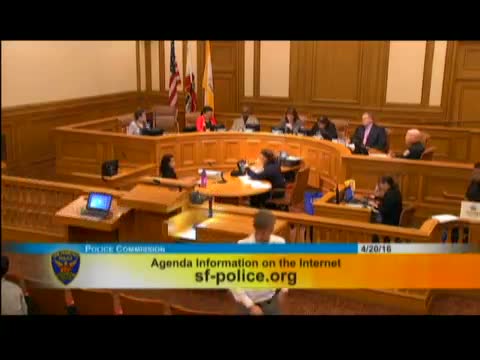
SAN FRANCISCO — City human-resources officials told the Police Commission on April 20 that the meet-and-confer process required under state labor law is the principal reason the city has not yet deployed body-worn cameras, and the commission pressed officials to move as quickly as legally possible.
"We have had two meet and confer sessions to date and we have three additional dates on calendar," Martin Grama, employee relations director for the Department of Human Resources, told commissioners. He said April 26, May 5 and May 19 were scheduled and that labor representatives (the POA) had raised a number of proposals that require negotiation and, in some cases, return to the commission in closed session for direction.
Commissioners and dozens of public commenters voiced impatience. "We've waited over three years," one speaker said, and others asked detailed questions about enforcement: what penalties would apply if an officer turned a camera off during an incident, whether officers will have pre-access to footage before writing reports, and whether footage will be redundantly stored off the officer's device to prevent tampering.
Public commenters urged technical requirements: high-definition recording, automatic uploading to an off-site server or cloud, and no officer access to raw files on the patrol car hard drive. Ray Hartz asked bluntly how policy would be enforced: "What happens if his body camera's turned off and the whole incident at the traffic stop is not recorded?" Several speakers said that unless the policy includes enforcement mechanisms, cameras will not solve the transparency problem.
Grama described why some negotiations occur in closed session (government-code exception under meet-and-confer) and said the city would return to the commission for closed-session briefing before the end of the scheduled dates. Commissioners urged DHR to expedite legally permitted steps and to bring back specific proposals on enforcement and technical safeguards.
What happens next: DHR will continue negotiations on the scheduled dates; the commission will receive closed-session briefings and will consider options to accelerate deployment consistent with labor law and collective-bargaining rules.