Get Full Government Meeting Transcripts, Videos, & Alerts Forever!
Get email alerts on the People Plan topic
No spam. Unsubscribe anytime.
City presents people's plan to move crowds for America's Cup; staff estimates peak days in 'the 300,000s'
Summary
OEWD America's Cup Project Director Mike Martin outlined a 'people plan' to manage transportation and crowd movement for 2012–2013 event series, emphasizing transit backbone service, bike strategies, satellite parking and interagency coordination; staff said refined peak‑day estimates fall in the '300,000s.'
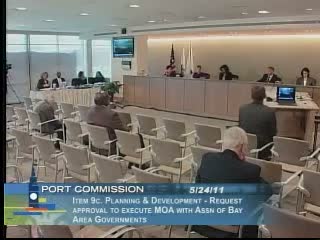
Mike Martin, America's Cup Project Director in the Office of Economic and Workforce Development, presented the city's 'people plan' describing strategies to move tens or hundreds of thousands of spectators for America's Cup events and associated test events in 2012 and 2013.
Martin said the draft people plan was released for public review and staff have held 24 public meetings since March; the final plan is expected by September and will be coordinated with environmental review. "The people plan is called for under the host and venue agreement," Martin said, and noted that some plan elements cannot be finalized until environmental review completes.
Martin described four guiding principles: resource efficiency, environmental sustainability, strategic adaptability and positive legacy. He outlined proposed transportation backbones including limited‑stop service on the 47 (Van Ness), augmented 30/30X service, potential reactivation of an 'E' line to connect Caltrain to Fisherman's Wharf, and robust ferry coordination. He emphasized bicycle strategies, bicycle parking and bike‑share or rental options along the Northern Waterfront; Martin said satellite parking with shuttles and partnerships with regional providers (BART, AC Transit) are being explored to discourage private cars near the waterfront.
On crowd projections, staff presented refined estimates for spectators and visitors: Martin said peak days could be "in the 300,000s" and non‑peak weekdays in the "50,000s," figures that staff are continuing to refine in the environmental review. Commissioners and public commenters pressed for clearer visitor profiles, consideration of international travelers' expectations and differentiated service tiers (including paid viewing areas and shuttle options). Martin said the city is coordinating with transit agencies and issuing status reports to solicit further public input.
Questions from commissioners and attendees covered freight and commercial shipping coordination on the water, shore power availability for spectator vessels during construction at Pier 27, Treasure Island access and shuttle strategies, ADA access, and strategies to control crowd dispersion across multiple viewing zones. Staff said the U.S. Coast Guard is leading waterway traffic management and that shore power at Pier 27 would be disabled during cruise terminal construction with possible temporary hookups under discussion.
Staff invited additional public comment through the end of the month and said additional status updates would be posted on the OEWD website.