Get Full Government Meeting Transcripts, Videos, & Alerts Forever!
Get email alerts on the Urban Renewal Finance topic
No spam. Unsubscribe anytime.
Urban renewal board directs staff to pursue $6.1 million increase in spending authority to finish First Street work
Summary
The Columbia Gateway Urban Renewal Agency on Oct. 21 voted to begin a substantial amendment to increase its maximum indebtedness by $6.1 million, aiming to finish downtown First Street streetscaping and related projects; the decision drew objections from the Mid Columbia Fire & Rescue representative over lost revenue for emergency services.
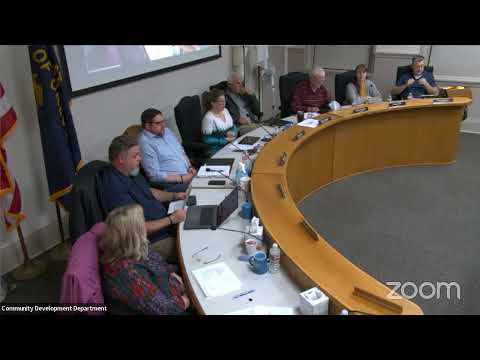
The Columbia Gateway Urban Renewal Agency voted Oct. 21 to begin the formal process to increase the district—s maximum indebtedness by $6,100,000 so the agency would have the spending authority needed to advance a set of downtown projects, including the long‑delayed First Street streetscaping.
Joshua Chandler, urban renewal manager, told the board the First Street corridor has suffered decades of deterioration and that the project, once part of an elaborate 2009 riverfront-connection plan, now focuses on essential repairs and above-grade streetscaping. "First Street really used to be a main corridor in The Dalles," Chandler said, describing the work as part of a broader downtown vision linking Federal Street Plaza, the Riverfront Trail and the Mill Creek Greenway.
Economic development officer Dan Spotts and consultant Elaine Howard said the amendment would not create new debt but would raise the agency—s statutory spending authority (maximum indebtedness, or MI) so collected tax increment funds could be used through the district—s scheduled termination in 2029. Spotts noted the agency—s uncommitted MI was about $2.2 million and that the requested $6.1 million expansion reflects an inflation adjustment allowed under state rules; he cited ORS 457.22 as governing the one-time post-2009 amendment.
Howard presented the fiscal analysis the board reviewed and warned that, if approved, the amendment would change revenue-sharing timelines with taxing jurisdictions. She told the board the separate fiscal‑impact tables project roughly $214,000 per year in foregone tax increment revenue for Mid Columbia Fire and Rescue under the full amendment scenario.
That projection prompted a forceful objection from Walter Denstedt, the agency member representing Mid Columbia Fire and Rescue. Denstedt said the district is facing an urgent paramedic shortage and cannot afford the loss of revenue without harming emergency services. "If responders come to your emergency, their knowledge, their training, their skill is now a big priority," he said, urging caution about diverting funds he described as needed for staffing and equipment.
Other board members and taxing-district representatives urged weighing short-term public-safety impacts against long-term downtown revitalization. Parks and recreation and downtown business interests argued that completing First Street and related projects would spur private investment and expand the tax base over time.
Councilor Timothy McLaughlin moved — and Stacy Coburn seconded — a resolution directing staff to commence the process under ORS chapter 457 to prepare the substantial amendment. After discussion the board voted to send the amendment forward; the chair announced the motion carried with one member recorded in opposition. Staff said they will notify taxing districts and proceed with the scheduled public process, including a planning-commission review on Nov. 7 and a city-council hearing tentatively set for Dec. 9.
Next steps: staff will transmit the documents to taxing jurisdictions for a 45-day consult-and-confer period and return to the agency Nov. 19 with updates to the private‑project list and any further analysis requested by the board.