Get Full Government Meeting Transcripts, Videos, & Alerts Forever!
Get email alerts on the Eab Detection Quarantine topic
No spam. Unsubscribe anytime.
Minnesota Department of Agriculture confirms Emerald Ash Borer detections in Polk County; quarantine and map updated
Summary
The Minnesota Department of Agriculture confirmed Emerald Ash Borer detections in Polk County, identifying two pockets in Glenwood Township. The agency urged residents to report suspected EAB, explained quarantine movement rules for firewood and ash material, and said the status map will be updated as surveys continue.
The Minnesota Department of Agriculture (MDA) on Tuesday confirmed Emerald Ash Borer (EAB) detections in Polk County, marking the 52nd Minnesota county with known infestations. Jonathan Austis, the MDA’s Emerald Ash Borer technical assistance coordinator, said the department has identified two pockets in Glenwood Township near 190 Fifth Avenue (Highway 55) and along Memorial Drive near County Road 21.
Why it matters: EAB is a wood‑boring beetle that kills ash trees by larval tunneling in the cambium. The new Polk County detections expand the agency’s quarantine footprint and affect movement rules for firewood and regulated ash products.
Austis described the MDA’s online status map as the primary public reference and said it is updated nightly with confirmed trees and quarantine boundaries. The map also shows "generally infested" buffers—starting at a two‑mile radius around confirmed detections—that reflect probable, cryptic spread beyond visible trees. Austis noted the insect’s natural spread rate averages about 1–2 miles per year and that the two‑mile buffer helps communities plan. He told residents, “If you’re in the Glenwood area, there’s a good chance EABs are already impacting your trees.”
Quarantine and movement rules: The MDA enforces both internal county quarantines and external restrictions on movement into Minnesota. Regulated articles include any ash material, EAB life stages, mulch, and all hardwood firewood cut to 4 feet or less. Under the MDA color guidance on the map, red indicates stop (do not move regulated material out of a quarantine county to a non‑quarantine county), yellow allows transit without stopping overnight, and green means free movement within non‑quarantine areas. The agency stressed that firewood and ash products can move freely within quarantine areas but cannot leave the quarantine to non‑quarantine counties unless they meet compliance treatment requirements.
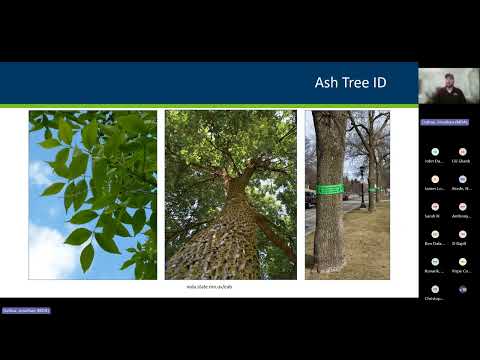
Local response and next steps: MDA staff said they will perform additional surveys (including fall/winter drive‑through assessments) to locate more infested trees and refine the map. Residents who believe they have located EAB are asked to take detailed photographs of symptoms (for example, S‑shaped galleries, woodpecker flecking, or D‑shaped exit holes) and report them via the MDA "Report a Pest" online form, EDDMaps, or to local city foresters. Austis emphasized the role of citizen reporting to improve early detection outside mapped areas.
The MDA recording and outreach materials, including the EAB status map and reporting links, will be posted on the agency’s Emerald Ash Borer web page in the days following the presentation.