Get Full Government Meeting Transcripts, Videos, & Alerts Forever!
Get email alerts on the Green Infrastructure topic
No spam. Unsubscribe anytime.
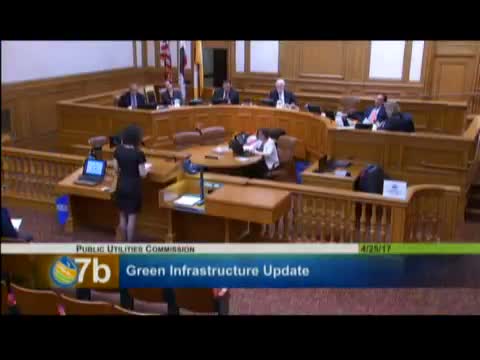
SFPUC details green infrastructure progress, targets and collection system plan
Summary
Staff said 305 SMO projects are in review and the agency's suite of green infrastructure tools — grants, EIPs, streetscape programs and regional capture — could remove roughly 0.5 billion gallons/year by 2032 and 1 billion gallons/year by 2050; commissioners pressed staff on measuring jobs and ancillary benefits.
Sarah Minnick, presenting for the San Francisco Public Utilities Commission, framed green infrastructure as a multi‑benefit approach that now emphasizes flood resiliency and multipurpose design. Minnick said the Stormwater Management Ordinance (SMO) has produced 305 projects in review; when complete those projects will manage over 100,000,000 gallons of stormwater annually from about 325 acres in the combined sewer area and nearly 220 acres in separate sewer areas.
Minnick described the program’s four tools in the forthcoming collection system plan: regional stormwater capture and reuse at schools and parks, stormwater management on SFPUC parcels, creek daylighting and floodable spaces, and a Streetscape Synergy approach to target opportunities. Staff also highlighted a small watershed stewardship grant program that has awarded about $1.3 million to 34 projects and a set of Early Implementation Projects used for monitoring and learning (four under construction; two in bid and award; one at 95 percent design; one conceptual).
Minnick presented modeled performance that, combined with SMO projects and EIPs, could reduce roughly half a billion gallons per year by 2032 and outlined a long‑term objective of about 1 billion gallons removed per year by 2050 (approximately 10 percent of city stormwater). She said staff will return with monitoring results from the first round of EIP data later in the summer and that a collection system plan will be available in July.
Commissioners sought to ensure the program captures ancillary economic and biological benefits — job creation, beautification, groundwater recharge — not just hydrologic performance. Minnick said multiple‑benefit metrics are embedded in project prioritization via the triple‑bottom‑line and urban watershed assessment tools and that ancillary benefits help projects “rise to the top” when performance is comparable.
Staffing and costs: Minnick reported two full‑time permanent staff dedicated to the SMO (plus consultant support) and said the review level of service improved from roughly 13 weeks to 4–7 weeks after adding FTEs and consultant resources. She acknowledged capital costs are substantial and said project selection will use cost thresholds and minimum project sizes to improve cost effectiveness; staff is exploring a project review fee to support inspection and program staffing.
What’s next: staff will return with EIP monitoring results later in the summer, deliver the collection system plan in July and continue developing a grant pairing for stormwater cost allocation and a training/technical assistance program to expand practitioner capacity.