Get Full Government Meeting Transcripts, Videos, & Alerts Forever!
Get email alerts on the Budget Police topic
No spam. Unsubscribe anytime.
SFPD presents $577 million base budget plan, hiring targets and body-camera timeline
Summary
SFPD outlined a roughly $577 million baseline budget for FY16–17, proposed hiring to reach mandated sworn staffing by mid-2017, dedicated capital funds (fleet, body cameras), and requested resources for training, IT and a new Bureau of Professional Standards to implement 21st Century Policing reforms.
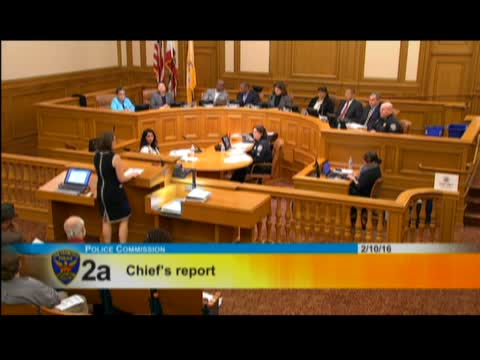
The San Francisco Police Department presented a base FY2016–17 budget Wednesday that Department Chief Financial Officer Catherine Maguire said totals roughly $577 million and focuses on hiring, training and capital projects tied to the department's reengineering of use-of-force and implementation of 21st Century Policing recommendations.
Maguire told the Police Commission that about 88 percent of the budget is salaries and fringe benefits and that the department plans to increase funded full-time equivalents from about 2,889 to roughly 3,027 in FY16–17 to support a sworn hiring plan aimed at meeting mandated staffing by mid-2017. The CFO said about 300 sworn members are currently in non–full-duty statuses (recruits, disability, leave), which reduces available staffing.
The department proposed capital requests including vehicle replacement (fleet), $3 million in the current budget for the body-camera program, and a $30 million EASRR bond allocation in 2016–17 for station facility improvements. Maguire said the department is seeking city and grant funding for implementation of DOJ recommendations and the president's policing task force pillars, including investments in data systems, e-citations and demographic collection to better analyze stops and use-of-force trends.
On body cameras, Chief Sir and Maguire said funds are in process and deployment is planned to begin at Bayview station in spring, subject to final approvals from the Board of Supervisors and related policy adoption. The department emphasized technology projects (crime-data warehouse expansion, vehicle connectivity and e-citations) to improve real-time data and geocoding of stops.
Commissioners pressed the department about training resources, cultural-competency and implicit-bias training, implementation timelines, and whether the budget includes funding for independent evaluation of reforms. The department confirmed intent to seek grant opportunities to supplement general-fund resources and to include placeholders for resources to implement DOJ recommendations.
The presentation framed the budget as enabling a suite of policy and training changes intended to improve transparency, community trust and operational practice as the department and commission work through the use-of-force reform process.