Get Full Government Meeting Transcripts, Videos, & Alerts Forever!
Get email alerts on the Fire Code Amendments topic
No spam. Unsubscribe anytime.
Rapid City Fire Division outlines 2024 code amendments to reduce housing costs and address lithium‑ion risks
Summary
Division Chief Chip Prehm presented proposed amendments to Rapid City's adoption of the 2024 fire code, aiming to remove some cost‑driving requirements for multifamily housing, add a hoarding section, require sensors to prevent sprinkler freeze‑ups, and restrict storage/charging of lithium‑ion micromobility devices in dwelling units except for dependent users.
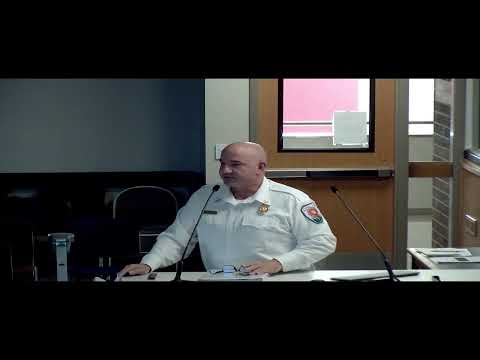
Chip Prehm, division chief for Fire and Life Safety at the Rapid City Fire Department, presented a package of proposed amendments to the 2024 fire code at the Public Works Committee meeting on Nov. 12, saying the changes are intended to improve safety while avoiding undue cost burdens on housing developers.
Prehm said the department conducted an extensive review of the 2024 AFC, consulted sprinkler and alarm contractors and engineering firms, and solicited input from builders and designers. He identified several substantive changes the department recommends: removing a requirement to prewire each dwelling unit for certain alarm or accessibility devices that the department assessed would raise alarm system costs — in one example a recent 150‑unit apartment system cost $71,000 under the amended approach versus an estimated $200,000 under the prior requirement; clarifying when a fire command center is required so local authorities can waive that requirement if an existing command center is available; adding a specific hoarding section for multifamily dwellings to address increased fire and structural load risks; restricting storage, charging, and repair of lithium‑ion micromobility devices inside dwelling units unless a resident depends on such a device for independent living; and adding a temperature sensor tied to the fire alarm to detect and alert on sprinkler‑riser room freeze conditions.
Prehm explained technical provisions intended to reduce long‑term costs: permitting nitrogen systems or approved corrosion prevention systems for dry‑sprinkler installations to limit corrosion (and potentially allow smaller pipe sizes), and adjusting thresholds to require nitrogen systems at about 10,000 square feet. He said duct‑detection alarms should report clearly to 911 to reduce unnecessary responses, and the department will work with designers to place smoke detectors to reduce nuisance alarms (for example, avoiding placements directly over kitchen ranges or immediately outside bathrooms). Prehm also cited studies on sprinkler benefits, noting protected buildings use far less water on average in structure fires and that sprinklers reduce firefighter exposure and business‑closure risk after a major fire.
Committee members asked whether single‑family homes would be required to have sprinklers. Prehm said there is no blanket requirement for 1–2 family dwellings; large single‑family homes could trigger requirements depending on available fire flow in the street and other siting factors. He also described an adjustment to the unit thresholds used to require additional attic access or fire‑apparatus access (changing a 30‑unit threshold to 40 to match other code guidance) and said the fire code official could determine alternate approaches where development constraints exist.
The presentation concluded with committee appreciation for the outreach and staff engagement Prehm described; no formal committee action on the code amendments was recorded at the meeting. The next procedural steps for formal adoption would proceed through the city's ordinance and council review processes if the department advances the package.
Next steps: the Fire Division indicated the amendments would follow the city's ordinance adoption process; committee members may request the amendments be routed to Council for further review and eventual adoption.