Get Full Government Meeting Transcripts, Videos, & Alerts Forever!
Get email alerts on the Elections And Cybersecurity topic
No spam. Unsubscribe anytime.
Residents raise alarms about voting machines and drone flights; supervisors call for study
Summary
Public commenters told Madison County supervisors they are wary of replacing aging voting machines and of drones flying at night over private property; supervisors cited federal cybersecurity guidance and agreed to research balanced local rules that protect critical infrastructure without unduly restricting agricultural or professional drone uses.
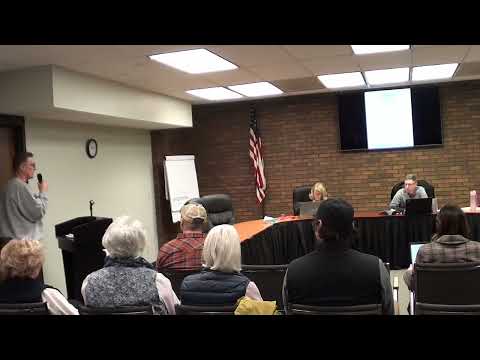
Public concern over voting machines and drones dominated public comment at a Madison County Board of Supervisors meeting, where residents urged the board to balance security and civil liberties while staff and supervisors outlined next steps.
Kevin Charter told supervisors he had heard the county might replace eight‑year‑old voting machines and urged careful review of any security risks linked to equipment that may be manufactured abroad. "I guess I'm in question of what is the reasoning behind that ... are we actually assured that we're going to have good integrity of our voting coming up?" Charter said. Another resident, Maria Mummer, said local hand counts and paper ballots produced a "cheap, very honest, very trustworthy" result in a recent caucus and asked whether high‑cost machines were necessary.
Concerns about drones were raised as well. Nancy Kruco said a large drone with bright lights flew over her house late at night; she said she had reported repeated overflights to the sheriff. "I want to know why they're flying at night and what are they doing flying over my house," Kruco said. The chair replied that law enforcement and military operations have different night‑flying allowances but suggested county staff and security experts should clarify local rules.
Supervisors and staff cited federal guidance from the Cybersecurity and Infrastructure Security Agency (CISA) and the FBI, which focus on two distinct risks: drones physically flying over critical infrastructure and drones—especially foreign‑manufactured models—connecting to local networks and sharing sensitive data. One supervisor said the county should avoid a blanket prohibition that would prevent professional or agricultural drone use and recommended a focused, common‑sense policy.
Erin, a public‑health or staff representative, urged the board to convene security or technical experts and suggested a committee or security meeting to draft recommendations. Supervisors agreed to research options, including distinguishing critical infrastructure from ordinary public buildings and looking at courtesy permitting for drone use on county grounds, rather than immediately adopting an ordinance.
The discussion did not produce new regulations; members said they would gather more information and likely address the matter in a future security meeting.