Get Full Government Meeting Transcripts, Videos, & Alerts Forever!
Get email alerts on the Workforce Succession topic
No spam. Unsubscribe anytime.
SFPUC outlines workforce succession plan as many staff near retirement
Summary
SFPUC staff told the commission that an aging workforce and voluntary separations are driving a multi‑pronged succession plan that includes competency models, mentoring, workforce pipelines and national partnerships to recruit and retain skilled trades and technical staff.
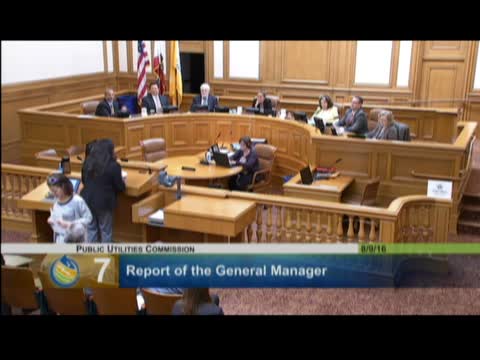
The San Francisco Public Utilities Commission heard detailed presentations on workforce succession planning and internal talent development Wednesday, where staff warned that rising retirement eligibility and voluntary resignations will create gaps in key technical and trade roles over the next five years.
Juliet Ellis, assistant general manager for external affairs, said succession planning is part of the SFPUC’s 2020 strategic plan and noted the Commission has been engaging other utilities and federal agencies to seek new programs and funding. Ellis described the work as “multi‑pronged,” spanning human resources, enterprise workforce planning and external partnerships.
Cindy Schurron, the SFPUC’s human resources director, presented demographic and retirement data showing the commission has approximately 2,100 filled positions and about 300 vacancies. She said the average age of current employees is 49 and that retirement eligibility is projected to grow, with some enterprise occupations — notably wastewater operators, engineers, chemists and other specialized professionals — at higher risk of losing institutional knowledge.
Schurron also highlighted that among employees who left in recent years, roughly 35 percent were retirements and 43 percent were resignations. She said the resignations indicate retention and career‑path issues in addition to expected retirements.
Danielle Wittorpe of Enterprise Workforce Planning described a competency‑model initiative that defines leadership and occupational skills across five levels of expertise, and includes career maps, development resources and an individual development plan available to staff. The models are intended to support knowledge transfer, selection and promotion decisions and to make internal career pathways more transparent.
Commissioners asked about exit interviews, midyear performance checks, the relationship between competency tools and civil‑service job analyses, and whether turnover reflects external recruitment by private utilities. Staff said exit interviews are not uniformly institutionalized across every bureau but that many separations reflect promotions internal and external to the city; they also emphasized ongoing work with the Department of Human Resources to align competency work with civil‑service requirements.
The presentation also outlined outreach and pipeline work: paid internships and youth programs (staff estimate reaching roughly 1,500 youth this year), partnerships with vocational high schools and regional workforce collaborators, and national conversations about a potential industry certification for utility occupations.
The Commission asked staff to return with additional details on construction‑related hiring (SSIP pipeline), metrics the department will use to track program effectiveness and further information about exit interview practices and reasons for resignations. The Commission and staff agreed to continue developing measures for retention and to bring more concrete proposals on targeting high‑priority hiring needs and scaling career pathways into the SFPUC.