Get Full Government Meeting Transcripts, Videos, & Alerts Forever!
Get email alerts on the Wildlife Geese topic
No spam. Unsubscribe anytime.
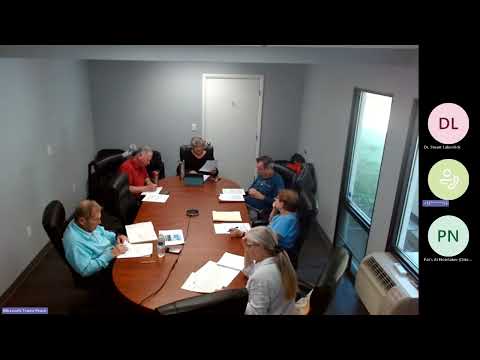
Ocean Pines advisory committee debates egg addling, questions past culling and next steps
Summary
The Ocean Pines Environment Advisory Committee discussed nonlethal options for managing a growing Canada goose population, reviewed past culling linked to state agencies, and asked staff to research DNR guidance and local vendors before recommending action.
The Ocean Pines Environment Advisory Committee spent much of its meeting weighing options to manage a rising Canada goose population, with members urging research and caution before recommending any direct action.
The committee chair (unidentified in the transcript) said the group’s research showed the original culling was done “in association with the Department of Agriculture and the Department of Natural Resources,” and that the committee has not found a local vendor to repeat that approach. The chair said she could not recommend operational steps without additional information from state agencies and local partners.
Committee member Patty, who has researched egg addling, described the technique as simple but emphasized practical safety challenges: “The problem is safely getting the geese off the nest and keeping them at bay while you're doing it,” she said, noting adult geese are protective and that handling nests can be hazardous for volunteers.
Another member said the committee had been told the meat from prior culling was donated but that a follow-up inquiry gave mixed results. The member said she contacted the Maryland Food Bank and was told “we have no idea what you're talking about,” though a local Worcester County food bank gave limited confirmation but no names of recipients.
Members discussed habitat-management alternatives that may reduce goose attraction, including Coastal Bays-funded shoreline plantings along the east side of the pond. John Viola, identified in the transcript as the general manager, was reported to be coordinating with Coastal Bays on grant work; the committee expects those plantings could be an interim, nonlethal measure.
The committee did not make a formal policy decision or vote on wildlife control. Instead, members agreed to pursue further fact-finding — contacting the Maryland Department of Natural Resources for guidance, tracking the Coastal Bays project’s timeline, and researching qualified contractors or trained personnel who could carry out egg addling safely if the committee recommends it.
Next steps the committee identified included awaiting the Coastal Bays planting schedule, compiling DNR guidance on egg addling versus lethal control, and clarifying whether previously reported meat donations from culling had an accountable recipient.
The advisory committee’s discussion concluded without a formal motion on goose management; members framed the item as research and education pending further input from staff and state agencies.