Get Full Government Meeting Transcripts, Videos, & Alerts Forever!
Get email alerts on the Tax Rate topic
No spam. Unsubscribe anytime.
Milledgeville manager recommends rolling millage to 11.37 mills; council takes first reading
Summary
At a Nov. 12 City Council meeting, the city manager presented four millage scenarios and recommended rolling back the 2024 millage rate to 11.37 mills. Council took the ordinance O-24-11-12 up for first reading; a five-year tax history will be published Nov. 16 and a second reading is set for Nov. 26.
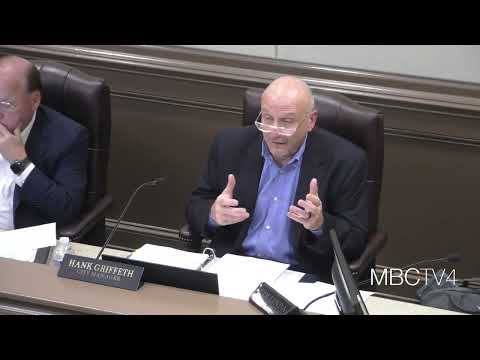
City Manager Mister Griffin told the Milledgeville City Council on Nov. 12 that he recommends rolling back the city’s 2024 millage rate to 11.37 mills as the council took the first reading of ordinance O-24-11-12. Griffin said the county’s recent reassessment raised the city’s property-tax digest and presented four millage scenarios and a five-year digest at council desks.
“ My recommendation is option b on the sheet that’s on the chart that you have in front of you,” Griffin said, referring to the 11.37-mill option. He told council that if the rate stayed at last year’s 12.12 mills the city’s maintenance-and-operations taxes would increase by a little over $1 million, and that rolling back by three-quarters of a mill would position the 2025 budget in good shape.
The manager said the city must publish a five-year tax history to meet statutory notice requirements; the history will be published in the Union-Recorder on Nov. 16 and the ordinance will return to council for a second reading on Nov. 26. Griffin also noted that, if the council approves a millage at the required meeting, tax bills would be mailed by Dec. 1 with a Jan. 31 payment deadline.
Why it matters: the millage rate determines the city portion of property taxes paid by homeowners and businesses. A rollback to 11.37 mills would reduce the city tax rate from last year’s 12.12 mills while relying on an increased digest. Griffin offered to share individual taxpayer calculations with council members one-on-one.
Council response was procedural and clarifying; members voiced support for the manager’s recommendation during the meeting but took no final vote on the ordinance beyond the required first reading. The ordinance’s millage field remains blank on first reading by practice; council will set and vote on a final millage at the second reading.