Get Full Government Meeting Transcripts, Videos, & Alerts Forever!
Get email alerts on the Budget topic
No spam. Unsubscribe anytime.
Fountain Hills board holds public hearing on proposed 2024–25 budget amid state funding uncertainty
Summary
At a public hearing the district presented a conservative proposed 2024–25 budget that assumes a 100‑student enrollment drop and flags two state risks: a possible $1.3B aggregate expansion limit shortfall (potential ~16% cuts) and a $183M reduction to building renewal grant funds; board will adopt a proposed budget and revisit details on June 18.
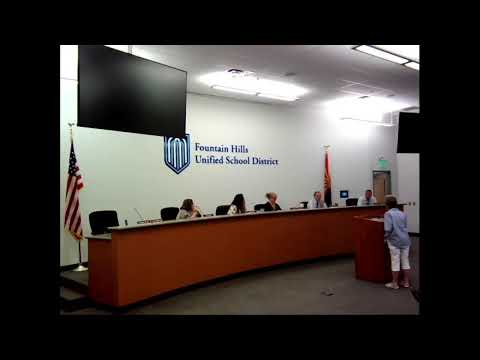
The Fountain Hills Unified School governing board held a public hearing on the district’s proposed 2024–25 budget, hearing a presentation that warned of two statewide risks that could materially shrink school funding.
Budget presenter (Speaker 6) told the board the district used preliminary state budget forms because the legislature had not yet passed a K‑12 budget. He told the board that “the aggregate expansion limit…would equate to approximately 16% reduction in the budget if the legislature does not do anything,” and flagged a separate state decision that could cut approximately $183,000,000 in building‑renewal grant funds available to districts across Arizona.
Using the preliminary forms the district built a conservative maintenance‑and‑operations proposal (roughly $10.9 million) and a capital proposal (just over $4.0 million). The presenter said the proposal assumes a decline of about 100 students in average daily membership (ADM) and carries contingency balances ($456,000 in M&O carryforward this year and about $1,000,000 in the capital fund). He said the board must present a proposed budget now and will formally adopt it on June 18, with a statutory opportunity to revise the budget by Sept. 15 if state action changes the calculations.
Board members pressed for clearer line‑by‑line detail. Board Member (Speaker 8) said she wanted “a little bit more of a breakdown of hard numbers” before approving final allocations. The presenter agreed to return on June 18 with more detailed capital prioritization and an itemized breakdown of the $1.8 million in district capital priorities.
Why it matters: the district’s funding depends heavily on state appropriations and statutory formulas; changes at the state level — especially the aggregate expansion limit and building renewal appropriations — could force districts statewide to make spending reductions or shift capital plans.
Next steps: the board scheduled final consideration and adoption of the budget on June 18 and will revisit details if the legislature acts before the statutory revision window.