Get Full Government Meeting Transcripts, Videos, & Alerts Forever!
Get email alerts on the Homelessness And Supportive Housing topic
No spam. Unsubscribe anytime.
Council delays a HOME-ARP allocation for "Familiar Faces" supportive housing to allow legal review and outreach
Summary
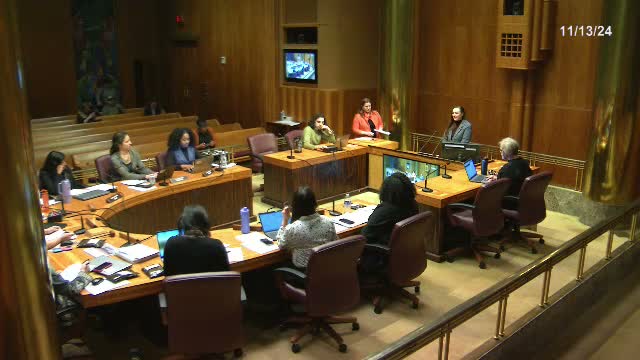
After a lengthy exchange, the council closed the public hearing on HOME-ARP capital allocations for the Familiar Faces supportive-housing proposal but laid the resolution over for one week so staff can provide legal and timeline clarifications and more community outreach.
City staff and the deputy mayor described a proposed allocation of HOME-ARP funds to support the "Familiar Faces" initiative, a planned supportive-housing and stabilization program aimed at people who are frequent users of emergency and justice system services. The council heard detailed briefings and then engaged in a long debate over timing, community outreach and the legal implications of attaching funds to a specific property.
What was proposed: Budget staff said $2.5 million of HOME-ARP grant funds would be allocated to purchase 268 Marshall (currently owned by Catholic Charities) and $3.5 million would be allocated to renovate the building, with the remainder for administration. Deputy Mayor Jamie Tincher described Familiar Faces as a program designed to stabilize frequent system users through shelter, intensive case management and long-term housing.
Points of contention and questions: Councilmembers (notably Buie, Kim and Johnson) pressed staff for clarity on programming costs beyond the capital allocation, confirmed that the HOME-ARP allocation would require a written funding agreement and environmental review, and asked about backup plans if planning or zoning decisions prevent use of the specified property. Staff said the allocation is a key step to enable a purchase agreement and that relocation services are needed for current occupants.
Outcome: Given the complexity and neighborhood engagement concerns, the council voted to close the public hearing and lay the resolution over one week (to Nov. 20) so staff can return with legal guidance (including quasi-judicial issues), a clear timeline for purchase/closing, and a plan for additional outreach to the affected ward.
Next steps: Staff will provide the requested legal and procedural clarifications, environmental and relocation timelines, and a public-engagement plan for the week-ahead report.