Get Full Government Meeting Transcripts, Videos, & Alerts Forever!
Get email alerts on the Collection Development Policy topic
No spam. Unsubscribe anytime.
St. Paul library board adopts updated collection development policy with added notice requirement
Summary
The St. Paul Public Library board adopted an amended collection development policy implementing Minnesota Statute 134.51's reconsideration procedures and intellectual freedom standards. An amendment requires the materials management supervisor to notify the library director and board chair in writing when responding to reconsideration requests.
Library staff presented and the board approved an amended collection development policy that formalizes how the St. Paul Public Library handles requests to reconsider items in its collection.
Materials Management Supervisor Jessica Zilhart told the board the change follows Minnesota Statute 134.51, which requires libraries to adopt procedures for receiving and reporting challenges to materials. "The statute does state that libraries can't ban, remove or otherwise restrict access to an item based on the views, messages or opinions expressed in that item," Zilhart said, summarizing the law's limits on removing items because of viewpoint.
The policy sets the library's goals and selection criteria, including a focus on a popular materials collection driven by community demand; it outlines selection considerations such as relevance, diversity of viewpoints, format, cost and community needs. Zilhart said donations may be accepted if they meet criteria such as good condition and recent publication, and that items not added are often offered in library book sales, recycled, or disposed of if in poor condition.
Council Member Naker proposed an amendment to require that the materials management supervisor respond in writing to a reconsideration request and inform the library director and the library board chair. "I would just suggest adding to the last paragraph that the materials management supervisor also lets the library director know, which sounds like it's happening anyway," Naker said, and the amendment was adopted (recorded as in favor during the meeting).
Board discussion clarified local oversight for reconsideration decisions. Council Member Necker asked whether reporting goes beyond the Minnesota Commissioner of Education so the board or city would also have visibility; staff said appeals currently go to the library director and agreed policy language could be clarified to make that oversight explicit.
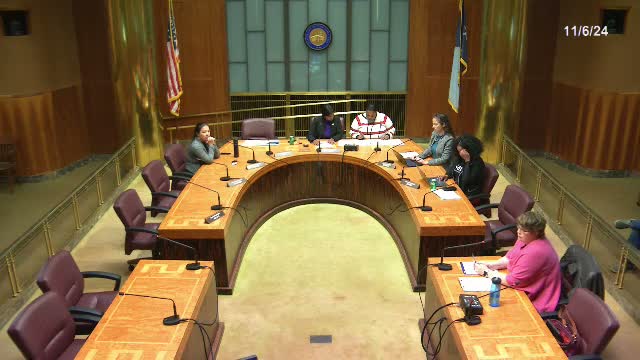
The amended resolution to adopt the collection development policy was then presented and approved by voice vote; the chair declared the resolution adopted (the transcript does not record a numerical roll-call tally for that final vote). The board previously recorded four members present at the start of the meeting.
Zilhart and other staff framed the policy around the principle of intellectual freedom and the library's role in providing a wide diversity of viewpoints while leaving material choices for children to parents or guardians. The policy also establishes a formal "request for reconsideration" process: staff typically try an initial conversation with a patron, and if the patron pursues formal review, a form triggers staff selectors and supervisory review. The statute now also requires reporting such reconsideration requests to the Minnesota Department of Education.
The board indicated it may revisit the policy language to clarify reporting lines and oversight to ensure the library director is in the loop when staff respond to reconsideration requests.
The board will forward the adopted policy to the city council consent agenda in keeping with the board's adoption process; next procedural steps and any public notice requirements were not detailed in the meeting transcript.