Get Full Government Meeting Transcripts, Videos, & Alerts Forever!
Get email alerts on the Budget And Revenue topic
No spam. Unsubscribe anytime.
Saint Paul council approves amendment to franchise-fee ordinance, narrows months to be collected
Summary
After heated debate, the City Council approved an amendment to the gas and electric franchise-fee ordinance to collect fees for April (not November), laying the revised ordinance over for final adoption next week.
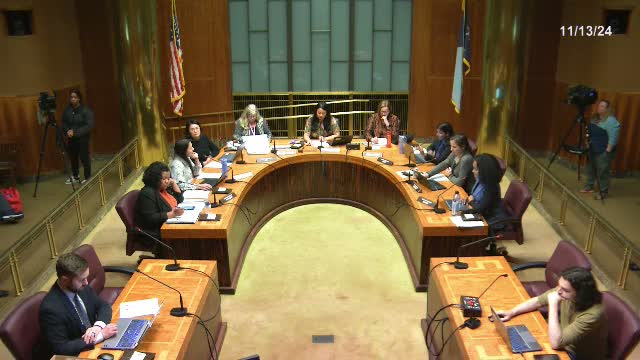
The St. Paul City Council on Nov. 6 approved an amendment narrowing months for levy of a residential franchise fee tied to the city's gas and electric franchise agreement.
Councilmember An agenda package and legal review produced a Version 2 of ordinance 24-32 for technical corrections. After extended discussion about equity, climate funding and household impacts, Councilmember Yang moved an amendment to collect fees in April only (removing November from the schedule). The council approved Yang's amendment in a roll-call vote and the ordinance was laid over for final adoption at the Nov. 20 meeting.
Why it matters: Supporters argued collection provides money now to fund climate resiliency and weatherization programs and offers budget flexibility; opponents warned of disproportionate burdens on energy-burdened households and urged targeting large commercial polluters.
Key figures and quotes: Councilmember Jost laid out the revenue case in favor of the broader version: "The estimate for how much money 2 months will generate is approximately $4,250,000 which ... would amount to approximately $35 per year per resident." Councilmember Yang, proposing the amendment, said the one-month approach "is a fair and equitable balance between bringing in more revenue to fund important climate work and being responsive to the financial constraints of energy-burden households."
Next steps: Because the council made changes to the ordinance text, the item was laid over to Nov. 20 for final adoption in its revised form. Council members said they will continue working on a plan to allocate the new revenue to climate priorities while monitoring resident impacts.
The council did not yet adopt a final spending plan; those budget decisions will come through the budget process.