Get Full Government Meeting Transcripts, Videos, & Alerts Forever!
Get email alerts on the Public Health topic
No spam. Unsubscribe anytime.
St. Paul Fire begins offering Suboxone in the field to patients after overdoses
Summary
The St. Paul Fire Department told the City Council it has started a pilot to administer an initial dose of buprenorphine/Suboxone in the field to people treated with naloxone or in withdrawal, with physician oversight, peer review and follow-up supports.
St. Paul's fire department told the City Council on Nov. 6 it has begun a pilot program to deliver an initial dose of buprenorphine (Suboxone) to people in the field after opioid overdoses or when they present in withdrawal.
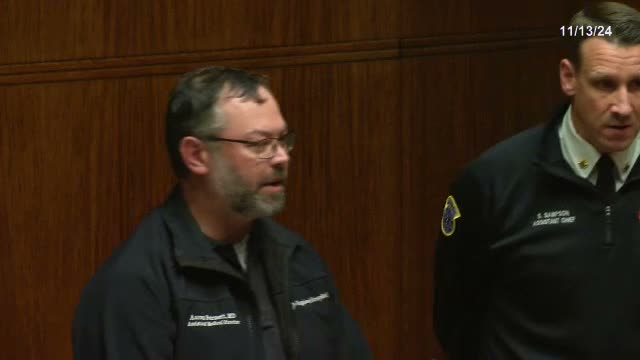
"Today we have a fire department that's going to be able to offer an initial dose of Suboxone to those patients in the streets of Saint Paul when they're, at their most vulnerable," Dr. Aaron Burnett, medical director for St. Paul Fire and a Regions Hospital physician, said during the briefing. He said the program complements Narcan (naloxone) use and aims to reduce repeat overdoses by offering an immediate treatment option.
Why it matters: Council members and staff framed the program as an additional option for people who previously had no alternative in the pre-hospital setting. St. Paul officials said the pilot is intended to reduce the cycle of repeat overdoses and to provide a pathway to follow-up care.
How it will work: Fire department leaders said the program requires coordination with the DEA and physician oversight. Each administration of Suboxone will be reviewed by a peer-review committee that includes emergency medicine, EMS, toxicology and addiction-medicine providers. The city also distributes fentanyl test strips and "leave-behind" information kits. Fire staff said they will follow up with patients within 24 hours to help connect them to continued services.
Council response: Multiple council members praised the rapid rollout. "This is such a problem in our community," Councilmember Naker said, commending the department and Regions Hospital for the work. Councilmember Kim said the approach could reduce strain on first responders and hospitals.
Limits and next steps: Officials said the pilot is controlled and does not require police involvement or automatic hospital transport. The council asked for future briefings with data on how often Suboxone is administered and the outcomes; the fire department signaled it will return with additional information in coming months.
The council did not take a vote on policy changes; this was an informational staff update and Q&A.