Get Full Government Meeting Transcripts, Videos, & Alerts Forever!
Get email alerts on the Licensing And Enforcement topic
No spam. Unsubscribe anytime.
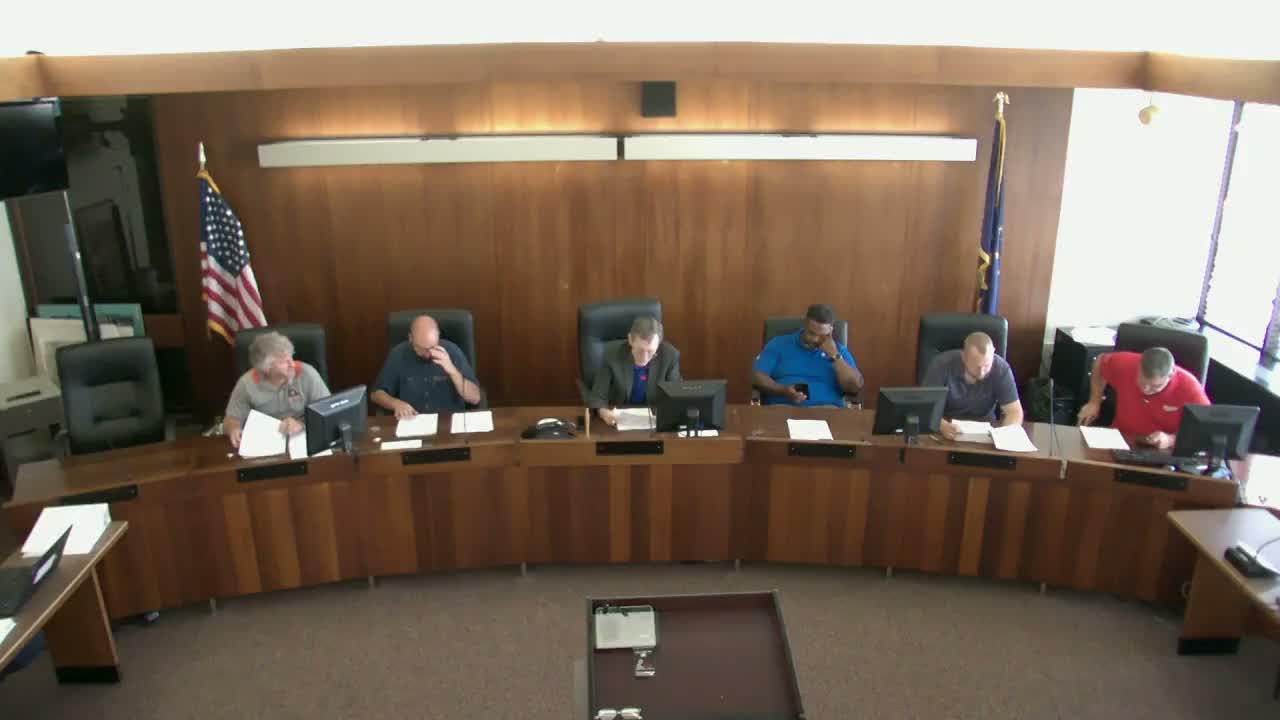
Evansville City licensing board approves multiple apprentice and journeyman applications, debates verification steps
Summary
The Evansville City licensing board approved several apprentice and journeyman applications and spent much of the meeting debating whether to require W-2s or random spot checks to verify claimed work hours and notarized letters of recommendation.
The Evansville City licensing board approved multiple apprentice and journeyman applications on Friday and opened a longer discussion about how the board should verify applicants’ claimed work hours.
The meeting began with Speaker 1 reading a roster of apprentices, including Isaac Middleton and Braden Pitts, and noting that the apprentices are enrolled at Ivy Tech. Speaker 2 moved to approve three apprentices; the motion was seconded and the group began the voice vote amid brief procedural confusion before the board completed other items.
The board then approved the minutes from last month’s meeting and processed several journeyman applications. Speaker 1 asked the group to approve Ricky Bethel Jr. as a journeyman after discussing discrepancies in his reported hours; members said “aye” to approve the application. The board also approved Blake Young, Beth Chetta and Frank Coley after motions, seconds and voice votes.
A longer substantive exchange followed over the accuracy of letters of recommendation and how to confirm reported experience. Speaker 2 said the board had received multiple notarized letters with inconsistent hour totals from the same company and proposed a conditional approval for one applicant. "I'll make a motion to approve pending another notarized letter of recommendation," Speaker 2 said. Members agreed to the pending approach while flagging gaps in documentation.
Board members debated possible verification measures, including requiring W-2s or instituting random spot checks. "If they could provide W twos or something like that, that would prove it," Speaker 2 said, arguing that employer paperwork could verify claimed hours. Speaker 3 cautioned about legal limits: employers may not be able to share employee information without releases, and any change to application requirements would need attorney review. "The only thing you gotta be careful for is the legality side of this," Speaker 3 said.
Members also raised practical enforcement concerns: inspectors sometimes arrive after out-of-town contractors have left a job site, and the board has limited personnel for spot checks. "We don't have enough personnel," Speaker 3 observed, adding that relying on visible licensing on trucks and local licensed contractors can help inspectors identify noncompliance.
The board closed the meeting after a final motion to adjourn. No ordinance or policy change was adopted at the session; board members said further discussion and legal review would be needed before altering application requirements or enforcement procedures.
The licensing board did not specify deadlines for any follow-up, and several proposals (including using W-2s or implementing a randomizer tool) were left for staff and legal review.