
Mundelein trustees set preliminary $16.79 million property tax levy to send to full board
Get AI-powered insights, summaries, and transcripts
Subscribe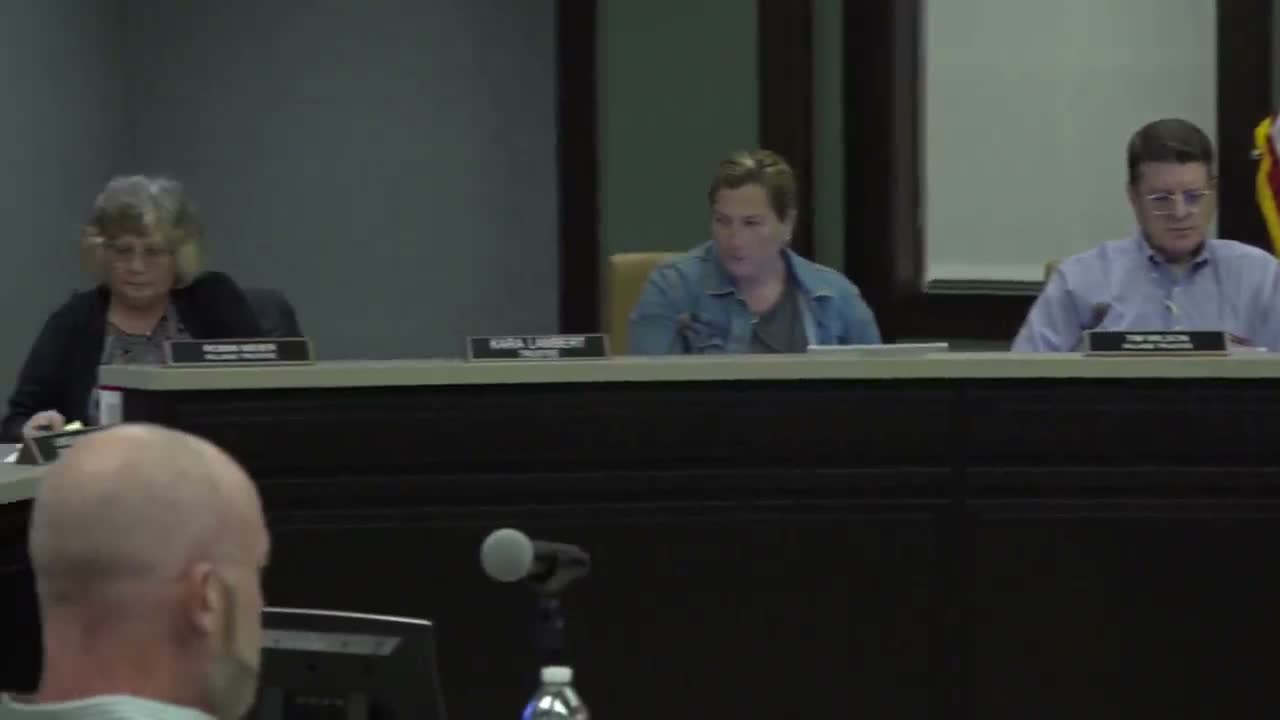
Summary
At a Nov. 11 Committee of the Whole meeting, Mundelein Village trustees weighed three levy options tied to pension funding and rising assessed values and by consensus directed staff to use $16,787,021 as the preliminary levy to be published for the required 20‑day notice ahead of a Dec. 19 vote.
MUNDELEIN, Ill. — Mundelein Village trustees on Nov. 11 discussed three preliminary property tax levy options and by consensus asked staff to use $16,787,021 as the figure to include in the ordinance and public notice ahead of a Dec. 19 vote by the full board.
Village staff presented three options that trade off near‑term homeowner impacts against increased funding for police and fire pensions. Gunther, the staff presenter, said property tax remains the village’s single largest revenue source and that pension obligations separate from the corporate levy are driving much of the discussion. “The minimum state required amount would then fund the police fund at 58%,” Gunther said, noting state actuarial rules that aim for roughly 90% pension funding by 2040. He added that taking full advantage of a reported 10.3% increase in estimated assessed value (EAV) would have raised the total levy to about $17.7 million in the most aggressive scenario.
Staff’s recommended Option 1 would lower the village tax rate from 1.44 to 1.37 while increasing the overall levy by about $745,000. Gunther said that scenario would allow additional contributions of roughly $360,000 to the police pension and $180,000 to the fire pension and “would result in the increase annual increase of $66 to the taxpayer that lived in a home worth $300,000.” Option 2 would lower the rate to about 1.34 and hold corporate revenue flat, producing an estimated $40 annual impact on a $300,000 home; Option 3 would keep the levy dollar amount unchanged (rate near 1.31%) but risks requiring reserves or general‑fund transfers if anticipated EAV gains or collections fall short.
Trustees questioned the assumptions behind the revenue projections. Staff said sales‑tax receipts from a local cannabis dispensary have declined about $700,000 from earlier estimates and that an additional roughly $250,000 decline is possible next year as new competitors open. A quarter‑percent sales‑tax increase has generated about $600,000 in additional revenue, staff said, partially offsetting those losses. Trustees also discussed a commonly used 3% uncollected tax assumption and heard that the EAV figure shown was an estimate and not final.
The board’s discussion centered on two tradeoffs: reducing immediate homeowner costs versus accelerating pension funding and preserving the village’s credit standing. Trustee comments ranged from support for the staff recommendation to reluctance to raise taxes. Trustee Schwenk said he did not plan to support Option 1 at final vote, even though he expected the board to choose it, while other trustees said maintaining services and the village’s credit rating justified modest increases.
After a roll‑call style count of trustee preferences, the chair recorded a consensus to have staff prepare the ordinance and publish a preliminary levy figure of $16,787,021. Staff said a separate motion would follow at the regular board meeting to authorize the finance director to publish the required 20‑day public notice; the full board is scheduled to consider the levy ordinance at its Dec. 19 meeting.
Minutes from the Oct. 28 Committee of the Whole were approved at the start of the meeting and the session adjourned after trustees recorded unanimous consent on the adjournment motion.
What happens next
Staff will prepare an ordinance and the finance director will publish the preliminary levy figure for the 20‑day public notice period; the full board is set to vote on the final levy on Dec. 19. The published number may be adjusted between the notice and final vote if staff identifies calculation errors or new information about assessed value or collections.