Get Full Government Meeting Transcripts, Videos, & Alerts Forever!
Get email alerts on the School Finance topic
No spam. Unsubscribe anytime.
Mundelein trustees hear PMA briefing: new development likely won’t cover major school construction without voter approval or special financing
Summary
At an Oct. 28 Committee of the Whole, consultant Bob Lewis of PMA told Mundelein trustees that property‑tax caps and Illinois’ evidence‑based funding formula mean new property revenue from a proposed 25‑year development will probably pay operations but won’t cover major school construction; Lewis reviewed options including special service areas, alternate revenue bonds and referenda.
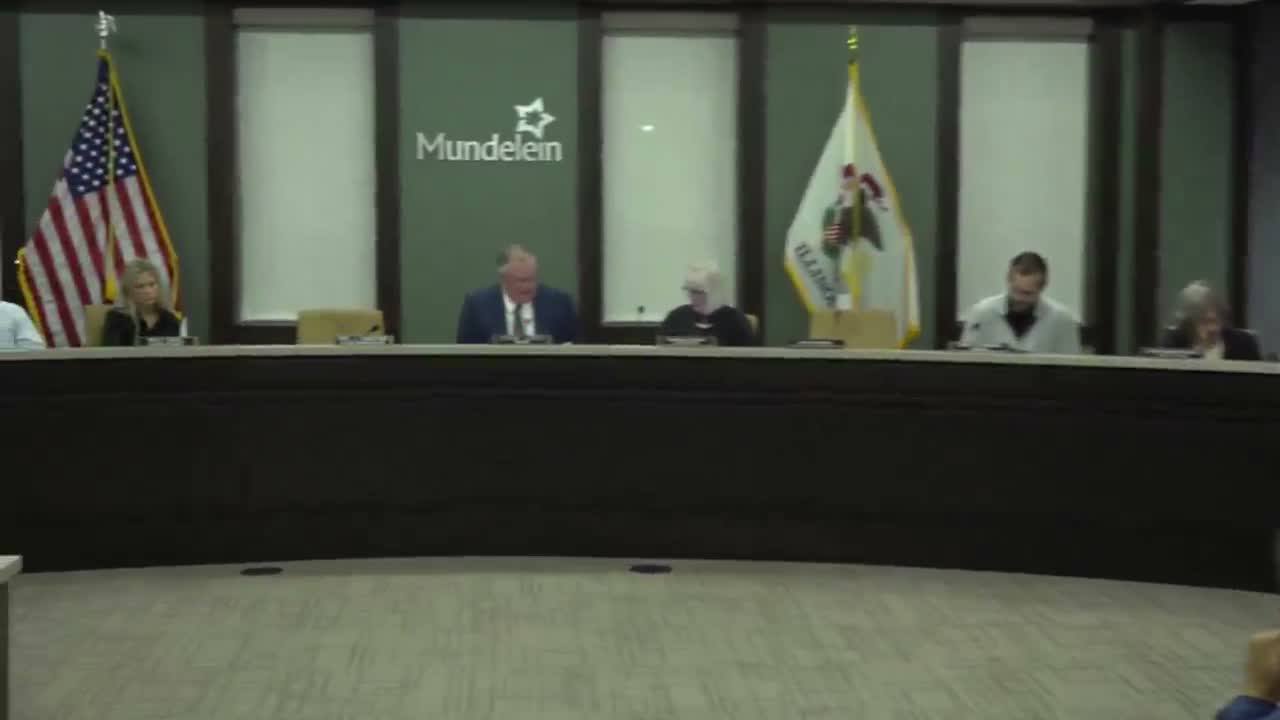
At a Committee of the Whole meeting on Oct. 28, 2024, Mundelein Village trustees and local school‑district leaders heard a presentation from PMA consultant Bob Lewis on how school districts are funded and which financing tools could cover capital needs tied to a large development expected over the next 25 years. Lewis told the board that while new development can generate property‑tax revenue for operations, it typically falls short of the funds needed to build new schools.
The presentation focused on three revenue streams for school districts — local property tax, state aid and federal aid — and explained how Illinois’ evidence‑based funding (EBF) model and county tax‑cap rules shape which districts get new state dollars. "Every year the state has allocated $350,000,000 to this model," Lewis said, and "$50,000,000 of that goes to property‑tax relief grants." He cautioned that the EBF tiers concentrate most new state dollars in the lowest adequacy tiers and that District 79 has historically been in a lower tier, receiving only about $31,000 in new state funds recently — "not even enough for a teacher," he said.
Why it matters: Mundelein trustees are preparing for the fiscal effects of a major, multi‑decade development. Lewis said new property added by construction and expiring tax‑increment districts does create revenue, but Illinois’ levy/extension rules and tax‑cap law can make it difficult to capture all available new property revenue if initial levies are misestimated. He illustrated the timing lag: properties are assessed as of Jan. 1 and may not yield full tax receipts until levy years one to two years later, while districts must often begin serving new residents immediately.
Lewis walked trustees through specific financing options and practical limits. He described special service areas (SSAs) used in other communities — where a subdivision is taxed to pay for a specific local school — and said this model was used in one case with Oswego 308 and the city of Aurora. He also described alternate‑revenue bonds (pledging sales or utility taxes) as a financing tool that may be possible but is limited and can require additional voter steps if pledged revenues are insufficient. "If the schools felt [projected revenues] were reliable, they could model securitizing an alternate bond," Lewis said, but otherwise "referendum is usually the go‑to." He noted that past state grant programs that covered large shares of construction costs were discontinued around 2002 and remain unfunded.
Lewis reviewed local figures discussed in the presentation: architects for one district identified roughly $40,000,000 in facility needs; District 79’s debt‑service extension base (DSEB) was cited at about $180,000 — which Lewis said limits nonreferendum borrowing to roughly $2,000,000 over a 20‑year window; District 120’s DSEB was cited at roughly $4,000,000. He urged trustees to collect more detailed scheduling and valuation data from the developer so districts can model timing and revenue flows before selecting a financing strategy.
Trustees asked clarifying questions about the Naperville impact‑fee formula and whether Mundelein could capture a larger share of developer contributions. Chair (identified in the transcript as Mayor Lentz) said neighboring towns use the Naperville formula and asked whether an SSA or other tool could be layered on top of property taxes. Lewis replied that SSAs and targeted assessments are possible in narrow circumstances and that projecting the mix and timing of residential versus commercial development is central to determining whether nonreferendum tools are feasible.
Procedural notes: Trustees moved to approve the Committee of the Whole minutes from Feb. 26, 2024; the clerk recorded affirmative votes and the chair declared the motion carried. After the presentation and a short Q&A, Trustee Schwenk moved to adjourn; the clerk recorded affirmative votes and the meeting was adjourned.
What’s next: Lewis offered to answer follow‑up questions by email and encouraged the village and school districts to share developer timelines and valuation projections so districts can model enrollment and revenue timing before deciding on referenda or targeted financing.