Get Full Government Meeting Transcripts, Videos, & Alerts Forever!
Get email alerts on the Bilingual Education topic
No spam. Unsubscribe anytime.
United ISD reports bilingual reclassifications rising, wins regional recognition
Summary
United ISD's bilingual department reported higher reclassification rates and program gains, telling the board the district is one of five large-district finalists in Summit K12 TELPAS usage for 2024.
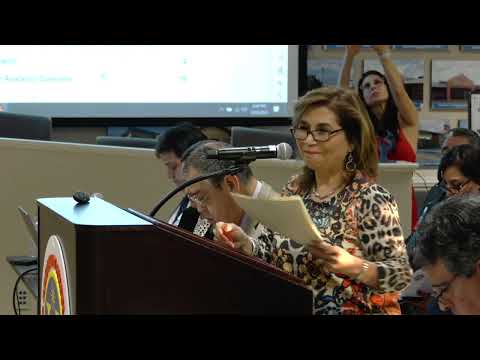
Meredith Ambula Ruiz, director for bilingual education, presented United ISD’s annual bilingual program evaluation and highlighted improved reclassification and assessment outcomes compared with last year.
Ruiz told trustees that the district’s emergent bilingual enrollment stands at about 16,615 students (roughly 40% of enrollment) and that reclassifications rose to 1,859 students — described in the presentation as about 10.5% — compared with a prior-year reclassification rate of 1.41%. She said the state’s shift to a TOPAS composite score contributed to the higher reclassification rate and credited classroom instruction and targeted interventions.
The presentation also cited program-level targets (interim and long-term goals) and reported that the bilingual department offered 98 professional-development sessions during 2023–24 with about 1,763 teacher participants. Ruiz said United ISD and Roosevelt Elementary were finalists in Summit K12’s recognition for TELPAS usage and will be recognized at an October conference.
The report was presented as the district’s annual accountability update under Chapter 89; staff and trustees asked follow-up questions about program scale, the district’s approach to recent immigrants and comparative performance metrics.
Next steps: the district will post the program evaluation required on or before Nov. 1, and staff indicated ongoing monitoring of TELPAS and STAR data.