Get Full Government Meeting Transcripts, Videos, & Alerts Forever!
Get email alerts on the Animals Ordinance topic
No spam. Unsubscribe anytime.
West Lafayette council adopts animal-welfare code updates after debate over pet-store limits and barking rules
Summary
The council approved Ordinance 18-20-24 to amend the city’s animal code, aligning West Lafayette with neighboring jurisdictions on fees and procedures. Public testimony urged a more objective 'excessive barking' standard, and councilors raised questions about consistency with state law; legal counsel said the draft was structured to be compliant.
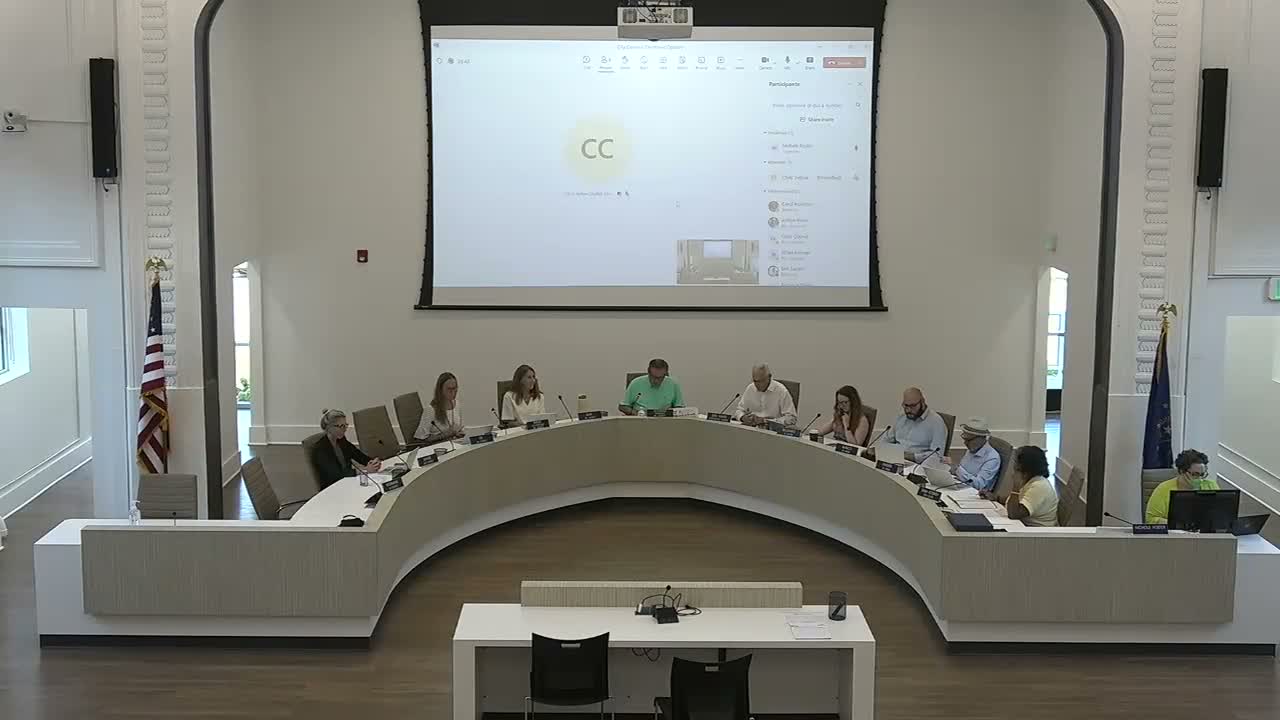
The West Lafayette Common Council voted to adopt Ordinance 18-20-24 on Aug. 5, changing the city’s animal-welfare code to align fees, penalties and procedures with Lafayette and Tippecanoe County.
Mayor Mary Easter, sponsor of the update, said the ordinance is the second step in a broader overhaul and will better align the three jurisdictions. “This will bring us in line all 3 entities for any of our fees, penalties, and procedures to be similar across the county,” she said.
During public comment, Vanessa Oria of 1415 Woodland Avenue told the council she faced repeated code-enforcement complaints from a neighbor over her two German shepherds and urged the council to add an objective standard for nuisance barking rather than leaving enforcement to subjective judgment. “My dogs are trained to bark at strangers…it’s just 1 or 2 barks,” Oria said, describing brief barks that a neighbor reported as a nuisance.
Councilor (Speaker 13) questioned language in the ordinance that would restrict sale of dogs at retail pet stores, noting a recent state action that limited local restrictions on pet sales. Building Commissioner Chad Spitznoggle said the draft is intended to define animal-care or shelter organizations separately from retail establishments and suggested restricting retail by zone or special exception where necessary. Legal counsel told the council the draft was prepared in consultation with the county attorney and the belief was that “this is compliant with state law the way it is structured.”
Councilor (Speaker 5) asked whether the term “excessive” in the nuisance section could be given a fixed, objective metric; legal counsel responded that nuisance law is long-established and focuses on frequency and loudness rather than a single numeric threshold, and that courts evaluate whether noise is “unreasonably disturbing” based on circumstances. The councilor withdrew a proposed amendment after that explanation.
The clerk called the roll; councilors Belisario, Blanco, Burr, Dennis, Leverence, Parker and Sanders each answered “Aye,” and the ordinance passed on second reading.
The ordinance changes included definitions to distinguish retail pet stores from animal-care or shelter organizations and language on fees, penalties and prohibited acts. The council did not adopt an objective minute-based barking threshold at this meeting. Any future amendments or related administrative rules would be handled through the council or staff as the new code is implemented.