Get Full Government Meeting Transcripts, Videos, & Alerts Forever!
Get email alerts on the Criminal Procedure topic
No spam. Unsubscribe anytime.
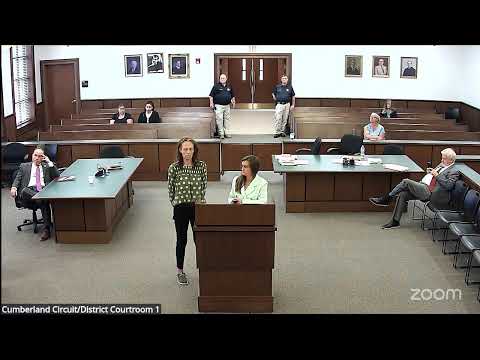
Judge in Cumberland County denies expert‑exclusion request on cell‑phone geolocation, sets privilege hearing in O'Donnell murder matter
Summary
In Caldwell v. Thomas O'Donnell the court denied a defense motion to exclude detective testimony about geolocation interpretation, granted a separate motion in limine to exclude unrelated drug‑evidence, and scheduled a hearing to resolve whether jail deputies improperly read a notebook marked confidential. The judge asked counsel to provide case law on trial structure and expedited KCPC evaluations where needed.
A Cumberland County Circuit Court judge on the record on Friday denied a defense motion to bar a detective from testifying about interpretation of cell‑phone geolocation evidence, while granting a separate motion in limine to exclude other drug‑related evidence in the case involving Thomas O'Donnell.
Defense counsel argued a recent Kentucky Supreme Court opinion affects whether a non‑expert detective may interpret geolocation extractions and asked the court to exclude that testimony. The court said foundational testimony by the lead detective could be presented and, if technical interpretation required an expert, counsel could interrupt the sequence to call and cross‑examine a qualified expert. “I’m gonna deny your motion at this time,” the judge said, but left the door open to revisit the issue at trial if presentation became prejudicial.
The Commonwealth told the court it has FBI specialists prepared to serve as experts on cell‑phone extractions. The defense said it would amend expert witness notices if necessary; the judge urged counsel to produce any new case citations promptly so the court can reconsider pretrial rulings where appropriate.
Separately, the court granted a motion in limine to exclude evidence of drugs found in a vehicle in California — a ruling the parties were asked to reduce to an order for the record.
Another contested issue concerned a notebook that defense counsel says was marked confidential but was viewed by jail personnel. Defense counsel argued the court must see the notebook to determine whether privileged material was disclosed and whether any disclosure prejudiced the defendant. Prosecutors countered they had reviewed the materials and advised the court those items are privileged attorney‑client communications that cannot be turned over while the privilege stands. The judge scheduled a hearing to determine whether in‑camera review or another record‑preserving procedure is required and to resolve whether any noticed aggravating circumstances should remain in the case.
On a related procedural matter, counsel asked the court to expedite a Kentucky Correctional Psychiatric Center evaluation for a defendant; the court said it would sign an expedited request if submitted in writing and discussed likely late‑September availability for expedited slots.
The judge instructed parties to exchange citations and agreed to provide a written opinion on narrow threshold issues if requested. The court set further pretrial and scheduling dates and left many questions preserved for trial rulings or subsequent hearings.