Get Full Government Meeting Transcripts, Videos, & Alerts Forever!
Get email alerts on the Public Safety Fees topic
No spam. Unsubscribe anytime.
Josephine, Magnolia MUD leaders agree to draft clearer public-safety contract after disputed fee hike
Summary
City officials and Magnolia MUD board members met Sept. 15 and agreed to draft a term sheet to clarify what public‑safety services the city will provide, how fees will be calculated and when they will be reviewed after residents and the MUD objected to a jump in the monthly public‑safety charge to about $77.
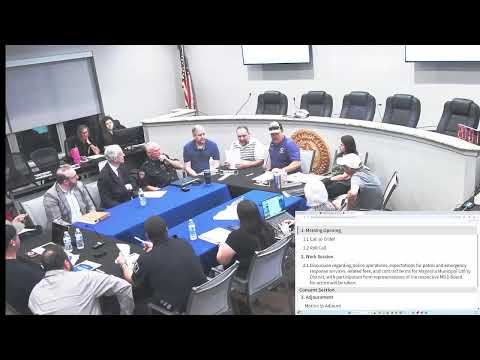
Josephine city officials and leaders of the Magnolia municipal utility district met in a special work session on Sept. 15 to address complaints about a recent increase in the district’s public‑safety fee and to map out a path toward a clarified service agreement.
Mike Phelps, president of the Magnolia MUD, told the city council the charge to MUD residents moved from roughly $35 to "about 77 and some change," and said residents want a clearer explanation of what that higher fee will buy. "We want to know exactly what we're paying for," Phelps said, adding the district contributes roughly 70% of the population served and expects proportionate value for that share.
City Administrator Lisa Palumbo defended the work the city did to update its cost model, saying the consultant study broadened the budget categories to include dispatch, jail services, radios and equipment and showed the city had been undercharging. "It actually came out, more expensive, than what we were charging," Palumbo said, noting the city also used a funding agreement to advance construction of a public‑safety building that cost just over $9,000,000 and for which the MUD covered a substantial portion of the debt in advance.
Chief Jeff Graham described how officers respond to calls in the MUD and said the department wants better communication with district residents to improve outcomes. Rob Dillard, city attorney, cautioned against overstating the city’s authority: "The city does not have any ability to make it a crime outside the city limits," he said, explaining that some kinds of local ordinances cannot be created or enforced by the city beyond its boundaries without specific statutory authority or a separate agreement.
Residents and board members described recurring safety issues — ATVs and off‑road vehicles driven on neighborhood streets, fireworks that block roadways, and motorists passing stopped school buses — and said enforcement can feel inconsistent or absent. Several speakers asked the city to show data distinguishing self‑initiated officer activity (for example, building checks) from dispatched calls so the MUD can see what is driving the higher cost.
The meeting considered several options discussed by attorneys and staff. One model would spell out a dedicated‑officer contract in which the district pays for a fixed number of officers and patrol hours; another would be a clarified interlocal or amended MUD agreement that lists the services provided, reporting expectations, review cadence for fees, and triggers for midyear adjustments.
Palumbo and other staff proposed starting with a short term sheet — a bulleted outline of requested changes — that the city and MUD could use as the basis for drafting formal contract language. City staff also said they are working to improve GIS and dispatch reporting so future budgets can break out calls for service from the MUD versus the city proper.
The city confirmed the council had approved the updated public‑safety fee the prior month and that the October 1 billing cycle would reflect the new rate; staff said they would commit to at least an annual review and to timing increases to align with budget cycles when feasible. The participants agreed to trade a proposed term sheet and resume negotiations in the coming weeks.
The meeting ended without a new vote or amendment to the existing agreement; a procedural motion to adjourn was moved, seconded and approved.
Next steps: the MUD will prepare an initial set of concerns for a term sheet, the city will circulate a proposed outline and staff will continue work on call‑data reporting and public outreach materials explaining how MUD public‑safety fees are calculated and billed.