Get Full Government Meeting Transcripts, Videos, & Alerts Forever!
Get email alerts on the Economic Development Tif topic
No spam. Unsubscribe anytime.
Jenks council approves Elm Street TIF and development agreement to fund up to $55M in infrastructure
Summary
The council adopted two companion resolutions to create TIF Area 7 (Elm Street) and authorize a development agreement that could reimburse up to $55 million for public infrastructure improvements tied to a mixed‑use project including retail, a condo component and sports facilities.
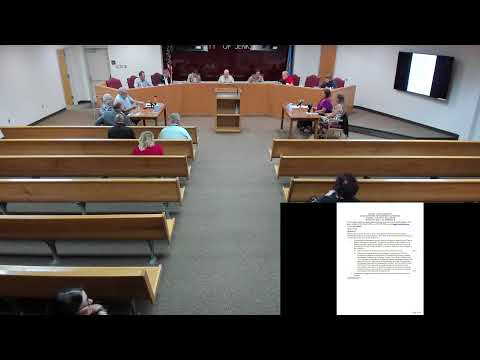
The Jenks City Council on Aug. 19 adopted two companion measures to support the Fields on Elm development: an initial resolution establishing Tax Increment Financing (TIF) District 7 for the Elm Street area and a development agreement that authorizes up to $55 million in reimbursable infrastructure costs.
Nate Ellis of Public Finance Law Group described the boundaries of the proposed TIF area and said it would not commence until Jan. 1, 2028; the district is planned for a 25‑year term and base assessed values will be set at commencement. The companion development agreement authorizes the Jenks Economic Development Authority to assist the city in administering reimbursements for streets, water, sanitary sewer, stormwater improvements, a lift station, parking and related public infrastructure, with a phase‑1 reimbursement estimated at about $49.5 million and a possible phase‑2 amount of $5.5 million.
Ellis and staff described projected economic impacts tied to the developer’s plan: an estimated $258 million in annual retail sales at full buildout (presented as a project estimate in the staff presentation), roughly $1.4 million in new city sales tax revenue, and about $2.2 million in new ad valorem taxes annually (a portion of which would be captured as TIF revenue). Project components discussed included a 270‑unit condominium, an interactive sports facility, approximately 128,000 square feet of retail and outdoor baseball/softball fields.
Council members asked clarifying questions about the reimbursement sources and risk: TIF revenues would come primarily from sales tax and a captured share of ad valorem growth within the district; leverage‑act revenues and other city revenue sources could supplement reimbursements in the early years. Ellis emphasized that reimbursements are capped and contingent on developer‑documented, completed improvements; the developer bears the upfront cost and the city reimburses according to the agreement and available TIF revenue streams.
Council approved Resolution 878 to commence TIF Area 7 and then approved Resolution 879 authorizing the development agreement. Council members emphasized that the TIF is structured to fund needed public infrastructure (not a blank check) and that taxing authorities, including Jenks Public Schools, had previously signed off on the district structure.
Next steps: The developer will proceed with infrastructure construction; reimbursements will be made against documented eligible costs and subject to the caps and schedules in the development agreement.