Get Full Government Meeting Transcripts, Videos, & Alerts Forever!
Get email alerts on the Downtown Development topic
No spam. Unsubscribe anytime.
Council approves MOU with Downtown Goldsboro Development Corporation, seeks clearer in-kind tracking
Summary
After lengthy debate about transparency, in-kind city staff time and conflict-of-interest safeguards, Goldsboro council unanimously approved a revised MOU with the DGDC; council asked staff to produce a policy to track in-kind hours and staff time devoted to nonprofit support.
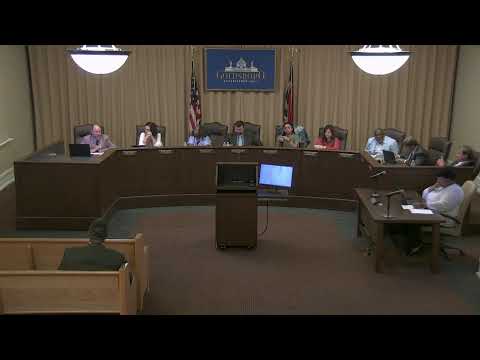
Goldsboro City Council on Aug. 18 approved a memorandum of understanding (MOU) that formalizes the relationship between the city's Downtown Development Department and the Downtown Goldsboro Development Corporation (DGDC), but the vote followed requests from council members that the city strengthen tracking of in-kind support and clarify when city employees act on behalf of the nonprofit versus the city.
DGDC leaders and city staff presented an updated agreement after council feedback at a prior meeting. DGDC representatives described decades of partnership, claimed more than $89 million in public/private investment since 2013 and cited volunteer time and grant matches (DGDC has committed money to Goldsboro Union Station, among other projects). "The work will be conducted for the city of Goldsboro for the dual purpose of increasing the quality of life for all residents and growing the economy of the city of Goldsboro," DGDC representatives said.
Several council members asked that the MOU and accompanying city practice explicitly document in-kind contributions and the hours city-paid staff spend supporting DGDC activities. "If an employee serves in both capacities, there should be clear documentation of when they are acting as a city representative versus when they are acting on behalf of the nonprofit," one council member stated.
Staff and the city manager said tracking in-kind hours was already under consideration and that a policy or documentation procedure could be developed and returned to the council. The council voted 7-0 to approve the MOU as presented, while directing staff to develop tracking mechanisms and consider formal policy language.
Why it matters: The agreement formalizes roles and expectations for a public-private partnership that the city says produces measurable returns (grants, volunteer hours and maintenance) and helps preserve downtown assets. Council's request for in-kind tracking aims to increase fiscal accountability and create an audit trail should a future review occur.
What's next: City staff will prepare a policy or administrative approach for documenting in-kind city services and staff time spent on DGDC-related work and will return to council with recommended language and reporting templates.