Get Full Government Meeting Transcripts, Videos, & Alerts Forever!
Get email alerts on the Animal Shelter topic
No spam. Unsubscribe anytime.
Advocates urge North Augusta to keep animal shelter local, propose coalition and fundraising ideas
Summary
Volunteers and nonprofit leaders urged the City of North Augusta to keep shelter operations in the city, outlined volunteer capacity and fundraising options, and asked council to help form a transparent coalition to support shelter operations and a new facility.
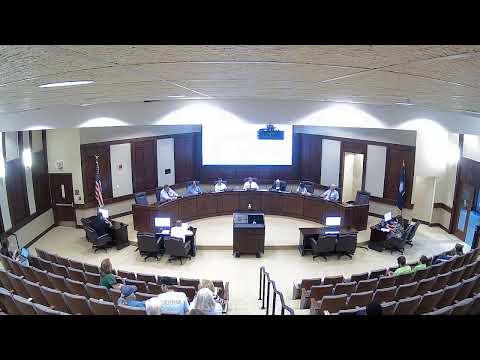
At a public powwow before the Sept. 15 North Augusta City Council meeting, volunteers and nonprofit representatives urged the city to keep animal-shelter operations local and outlined options for funding and community engagement.
Ally Jacobs, a volunteer, described day-to-day volunteer work at the city shelter — from kennel care to transporting animals to events — and appealed to the council to keep animals near their prospective adopters rather than send them to other counties. Jacobs said volunteers provide critical daily care and that ‘‘these animals are a part of our community, and they deserve to stay where they're loved, cared for, and supported.’’
Tyler Gallus, speaking for a local advocacy group that partners with the shelter, thanked the council for recent study sessions and called for a ‘‘working coalition’’ that would include the city, rescue partners and nonprofits to improve communication, transparency and rescue coordination. Gallus argued a modern, community-focused facility could expand services — including volunteer training, youth engagement, and onsite veterinary care — and credited volunteers and rescue partners for the shelter’s high save rate.
Dawn Porter, who drew on experience building a Charleston-area shelter, urged a mix of public and private funding, citing revenue strategies such as low-cost spay/neuter clinics, event fees, licensing, corporate and foundation gifts, and legacy giving. Porter described how a combination of municipal support and private fundraising underpinned Charleston’s larger facility and said operational sustainability requires predictable revenue sources beyond capital grants.
Speakers repeatedly warned that moving shelter operations outside North Augusta would shrink the volunteer base and reduce adoption opportunities. Advocates cited recent community actions — volunteer training programs, partnerships with local sports teams for adoption events, and a planned Oct. 3 benefit concert — as evidence of local capacity to support an expanded facility.
Council members present thanked speakers and asked staff to provide follow-up materials. Mayor Britton S. Williams and other council members said they were listening and would pursue additional information; the council did not take formal action at the meeting. The public powwow and the later council discussion left the issue open for further study, with advocates urging formation of the coalition and additional staff outreach to rescue partners and state funding contacts.