Get Full Government Meeting Transcripts, Videos, & Alerts Forever!
Get email alerts on the Capital Planning topic
No spam. Unsubscribe anytime.
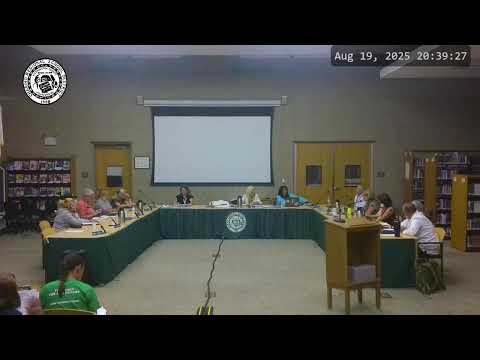
Chariho meeting spotlights long‑delayed elementary capital needs as members, public clash over vendor dataset
Summary
Public commenters urged faster action on a five‑year capital plan after a failed bond; committee members and administration disputed whether a Bureau Veritas dataset was a shareable 'draft report,' with administration calling the material incomplete and advising reliance on SLAM/Colliers for stage‑2 planning.
Gregory Avedesian, a Hopkinton resident, told the Chariho Regional School Committee on Aug. 19 that decades of deferred maintenance have left elementary buildings in poor condition and that voters deserve clearer facts before the district asks for another bond. "The condition of the elementary schools is only getting worse," Avedesian said, urging "a sense of urgency" and criticizing past committee members for campaigning against a prior bond and for not explaining tax impacts to voters.
That public criticism set the tone for a prolonged committee exchange over a Bureau Veritas submission the district received. Committee member Diane Taft said she had obtained a copy and asked why the administration had not told the committee earlier. Taft sought clarification about whether the document was a draft report or preliminary dataset and requested it be made available to members.
Superintendent Gina and district facilities staff responded that what they received from Bureau Veritas was an incomplete dataset rather than a finalized or shareable draft report. "This is a dataset; it is not even close to being a draft," the superintendent said, adding the vendor and state representatives had told the district the material was not ready for public consumption and that the district would meet with the vendor to request clarification. Gina said staff had more substantive information coming from SLAM (architect) and Colliers (owner's project manager), which the district had selected for stage‑2 planning, and urged the committee not to treat the Bureau Veritas material as definitive.
The exchange grew tense as members diverged over disclosure and usefulness. Diane Taft pressed that committee members had a right to see documents the district received; administration countered that circulating incomplete or inaccurate material risked public confusion. Legal counsel and other members emphasized that Bureau Veritas provides a high‑level, statewide overview while SLAM/Colliers produce the micro‑level analysis required for stage‑2 facility planning. "When you're doing...vendor work, that report is for the general assembly to make determinations," one member summarized; others said the district should not wait for the Bureau Veritas work to proceed with locally driven planning.
Why it matters: The district is preparing for possible capital work and stage‑2 applications that can lead to state or bond funding. Confusion over what the Bureau Veritas materials represent, and disagreement about when and how to disclose preliminary vendor materials to committee members, could slow planning and public outreach ahead of any future bond or stage‑2 submittal.
What happened next: The committee did not take formal action on the Bureau Veritas materials at the Aug. 19 meeting. Members emphasized that SLAM and Colliers — the firms conducting detailed local assessments — remain the primary sources for stage‑2 planning, and staff said they would meet with the vendor and provide a clearer briefing once usable information is available.