Get Full Government Meeting Transcripts, Videos, & Alerts Forever!
Get email alerts on the Board Actions topic
No spam. Unsubscribe anytime.
Seaford board approves policy updates, multiple assessment reports and routine academic items
Summary
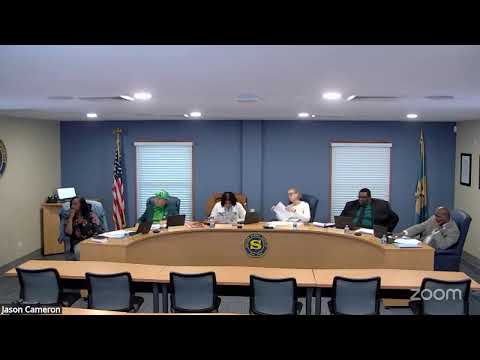
At its March 17 meeting the Seaford board approved second readings of Title IX/timeline policy and related policies (KLR/GBAA/KLG), denied three school choice applications (2025‑86 to 2025‑88), approved field trips and accepted multiple building assessment reports and the district financials.
The Seaford School District board took a series of routine but important actions at its March 17 meeting.
Policies: The board held second readings and approved the Title IX timeline policy (JIIIA) and related policy changes (GBAA) intended to revert certain Title IX language and remove corresponding legacy regulations and exhibits. The board also approved KLR (relations with governmental agencies) and KLG (relations with law enforcement authorities) as part of a policy cleanup that deletes outdated exhibits and regulations.
School choice and field trips: The board moved and carried a motion to deny school choice (school voice) applications 2025‑86 through 2025‑88. Separately, the board approved two student field trips (a high‑school drama club Broadway trip and a band event) as presented.
Building assessment approvals: The board accepted building assessment reports for Central Elementary, Lanes Elementary, Seabrook Middle School and Seabird High School, enabling staff to proceed with planning and bidding for repairs.
Financials: The district’s finance presenter reviewed February financials and a multi‑fund budget plan for FY26; board members heard that revenue is tracking slightly behind target (a transcribed figure referenced a $268,000 shortfall) but staff said collections historically improve late in the year. The board later approved the final financial reports presented.
Outcomes: All motions described above were carried by voice vote during the meeting; the transcript records standard procedural seconding and a unanimous ‘‘aye’’ pattern rather than recorded roll‑call tallies.