Get Full Government Meeting Transcripts, Videos, & Alerts Forever!
Get email alerts on the Pavement And Asset Management topic
No spam. Unsubscribe anytime.
NDOT district engineer says District 8 in generally good condition but faces a $31M shortfall to meet state target
Summary
District 8 engineers told the State Highway Commission the district’s roads are in good condition on average but that the district needs about $271 million over six years to reach a statewide NSI target of 84.7 while current funding is roughly $240 million, leaving a funding gap and risks to long‑term pavement condition.
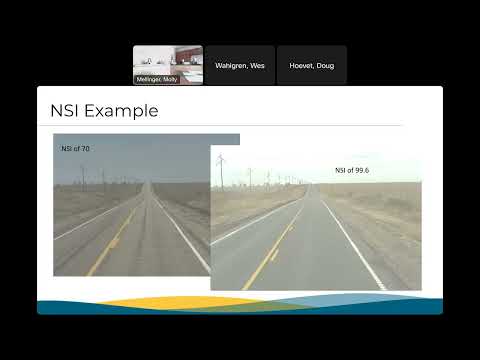
Mark Kovar, District 8 engineer for the Nebraska Department of Transportation (NDOT), told the State Highway Commission on June 27 that 99% of District 8 highway miles currently have an Nebraska Serviceability Index (NSI) above 70, and the district’s average NSI is 83 — a level he described as “pretty good.” Kovar said the NSI is a calculated index that aggregates observable pavement distresses such as rutting, cracking and patching into a single measure of pavement condition and remaining service life.
Kovar emphasized the index is a planning tool: “The Nebraska Serviceability Index is a calculated index,” he said, adding that pavements near 100 may have 15–20 years of service life while roads around 70 have reached the end of their optimal service life and need resurfacing. He warned that deferring maintenance accelerates deterioration and raises costs.
To reach the statewide NSI goal of 84.7 — a target the department adopted after a 2007 study — Kovar said District 8 needs about $271,000,000 over the next six years. “We’re currently funded at about 240,000,000,” he said, and characterized the difference as roughly “one or two projects a year short of where we need to be.” He said that at current funding the district’s pavement conditions will deteriorate faster than is desirable.
Kovar also urged commissioners to consider how proposed changes to funding distribution would affect rural districts. He cautioned that distributing funds by population or by where fuel is purchased would “devastate the roads in rural Nebraska” and overfund urban districts, and asked that funding be allocated based on system needs.
The presentation included examples of recently completed work and preservation tactics the district is using to extend asset life, including a recent Highway 11 resurfacing and greater use of preservation techniques such as cured‑in‑place culvert liners. Kovar and district staff invited questions and public input on the program of projects planned through 2031.
The commission did not take a separate formal vote on District 8’s overview; it proceeded to consider individual project resolutions later in the agenda.