Get Full Government Meeting Transcripts, Videos, & Alerts Forever!
Get email alerts on the Budget topic
No spam. Unsubscribe anytime.
Athens Area SD previews 2025 budget; superintendent flags $1.9M cyber‑charter cost and rising benefits
Summary
Superintendent Dr. Sage presented a preliminary budget preview ahead of an April 8 vote, saying local assessed value declines and rising PSERS and health costs create pressure. He said tuition to cyber charters will cost the district about $1.9 million—roughly 4% of the operating budget, or the equivalent of about 12.6 teaching positions.
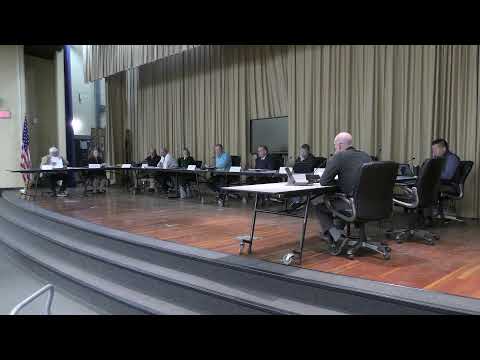
Dr. Sage, the district superintendent, told the board on March 11 that the district will present a preliminary budget at the April 8 board meeting and reminded members of Act 1 deadlines requiring preliminary adoption by 2025-05-31 and a final budget by 2025-06-30.
He said the district’s total assessed value declined from $281,000,000 to $278,900,000, which would reduce local revenues by about $114,495.90 if taxes are not increased. “If we do not increase taxes, our local revenues will actually decrease by $114,495.90,” he said. The board earlier voted in December to limit any tax increase to the Act 1 index (about 5.6%), which would move the millage from 54.3 to roughly 57.034.
The superintendent flagged cyber‑charter tuition as a significant local cost driver. He said the district currently has 68 students enrolled in cyber charter programs and that tuition payments to cyber charters will be “right around $1,900,000,” or about 4.04% of the district’s operating budget. “That is 12.59 teaching positions that we are not able to fill,” he said, describing the figure as an illustration of local impact rather than a claim about classroom headcount allocations.
Dr. Sage also summarized state proposals in Governor Shapiro’s budget—proposed increases in basic education, special education, facility improvement funding and other grants—but noted those proposals can change before final enactment. He cautioned the board not to rely on state figures as finalized revenue. “They always tend to change,” he said.
Board members asked for additional line‑item detail on health and benefits costs. The superintendent said the district’s PSERS employer rate is about 33.9% and will rise modestly in coming years; he also reported Blue Cross Blue Shield renewal terms include an 8.2% increase that will add $500,789 in costs (about $430,000 for current staff and $70,000 for retirees). He said federal reimbursements and one‑time ESSER funds used in prior years are no longer available and that the district is planning the 2025–26 budget without those dollars.
The superintendent closed by saying staff will prepare a preliminary budget for board consideration on April 8 and will continue to look for expenditure reductions and potential savings in contract negotiations.
The board did not take a final budget vote on March 11; the next formal step is the preliminary budget presentation at the April 8 meeting.