Get Full Government Meeting Transcripts, Videos, & Alerts Forever!
Get email alerts on the Homeless Shelters topic
No spam. Unsubscribe anytime.
Richmond planning commission tables draft zoning rules for overnight shelters pending regulatory details
Summary
The Richmond Planning and Zoning Commission heard a staff proposal on zones and setbacks for overnight homeless shelters, discussed capacity and state space guidelines, and unanimously voted to table the item so staff can provide building-code and regulatory guidance.
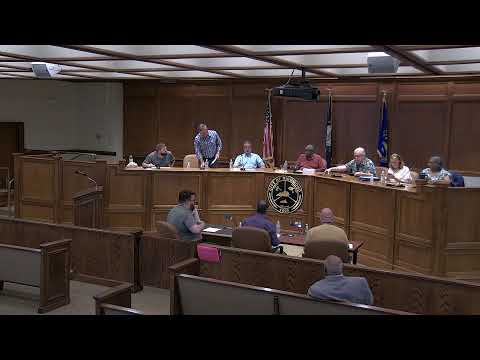
Richmond — The Planning and Zoning Commission on the evening’s agenda reviewed draft zones and setback rules for overnight homeless shelters but voted unanimously to table the proposal so staff can produce additional regulatory guidance.
A staff presenter summarized the draft ‘‘zone of determination’’ and said chosen zones would be conditional uses subject to Board of Adjustments approval. The presenter clarified the draft included a 500-foot setback from residential uses and public parks: “it is 500 feet from residential use … or public park,” the staff member stated.
A shelter proponent told commissioners the group hopes to serve 50 to 60 people and is looking, at scale, for roughly 15,000 square feet. “We would really like to be able to shelter 50 to 60,” the proponent said. The same speaker and others referenced a state guideline they cited as 220 square feet per person for shelters.
Commissioners probed whether an existing residence in agricultural zoning could become a shelter. Staff said an agricultural property could be used as a shelter if adapted to facility criteria and that such a use could become an existing nonconforming use if the property were rezoned later.
Several commissioners and a speaker with recent shelter experience raised operational and safety concerns. One commissioner described visiting a shelter reported to house 80 beds in about 5,400 square feet with only two toilets and two showers, and urged that any local facility follow applicable rules and best practices. The proponent said the group intends to follow regulations “from the get-go.”
Staff told the commission the city currently has no local regulations specifically tailored to homeless shelters and that building-code details must be pulled from the Kentucky building code. A representative with knowledge of municipal regulations offered to research state and league guidance and provide answers by the next business day or Friday.
Given outstanding questions about space-per-person rules, permitting paths and minimum code requirements, a commissioner moved to table the item to the next meeting so staff could collect and present the applicable regulatory standards; the motion was seconded and carried. Commissioners also discussed that Eastern Kentucky University had donated 60 bunk beds, but the proponent said no site or financing had been finalized.
The commission did not adopt the zoning changes; staff will return with the requested building-code and regulatory information at a future meeting.