Get Full Government Meeting Transcripts, Videos, & Alerts Forever!
Get email alerts on the Budget topic
No spam. Unsubscribe anytime.
Newton adopts 2026 budget after residents urge property-tax relief
Summary
The Newton City Commission adopted its 2026 budget unanimously after a public hearing in which residents — including several seniors — urged the commission to lower the mill levy and to prioritize cost savings. Commissioners said valuation increases, not a levy raise, are driving higher bills and stressed long-term growth strategies.
The Newton City Commission on Tuesday adopted the city's 2026 budget after a public hearing that drew several residents who said rising property bills are squeezing seniors and small businesses.
City staff opened the hearing by explaining that the Harvey County Clerk provided a revenue-neutral rate based on this year's assessed valuations, and that Newton's assessed valuation rose from $170,904,698 to $179,374,523, an increase the presenter described as about 4.95 percent. Staff said keeping the revenue-neutral rate would have reduced the city's levy by about 3.403 mills, equivalent to roughly $610,413 in local revenue.
"I, Rich Stinnett, mayor of Newton, do hereby proclaim the month of September 2025 as National Recovery Month in Newton, Kansas," Mayor Rich Stinnett read during an earlier proclamation before the budget hearing opened.
Several residents told the commission they want the mill levy lowered. "The senior citizens are just getting beat up," said Joe Solomon, a long-time attendee, who urged officials to find savings and to consider incentives for employees to identify efficiencies. Sam Rendy, another resident, complained that his Quail Creek neighborhood is not getting snow plowed even as taxes rise.
Staff and commissioners responded that the recent increases are primarily the result of county appraisal changes driven by state guidance, not a new city tax increase. "That value is assigned based on a formula," a staff presenter said, explaining how valuations and existing mill levies combine to determine tax bills. Commissioners also noted that the city has used tax-abatement tools to attract large employers and that abatements typically apply only to improvements for a fixed period.
Ed (city staff) summarized the commission's work on the budget before the vote and said the total budget expenditures for 2026 are $62,775,000, which the presentation noted includes $1,300,000 of reserves; staff described the document as the result of multiple budget sessions and as providing for wage and benefit adjustments tied to a classification and salary study.
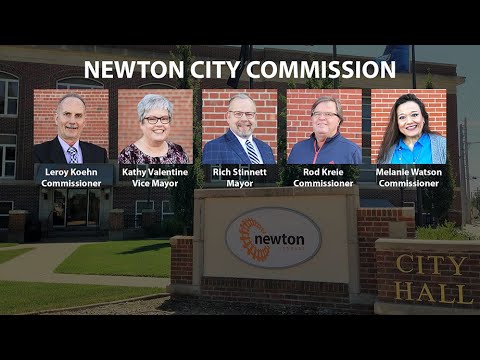
After public comment and discussion the commission moved on resolution G1364. Clerk Denise recorded a roll-call vote: Commissioner Scribe — Yes; Commissioner Valentine — Yes; Mayor Rich Stinnett — Yes; Commissioner Watson — Yes; Commissioner Kane — Yes. The vote was unanimous and the commission announced that the budget was approved.
The commission encouraged residents to participate in spring budget workshops and the upcoming comprehensive plan engagement to inform priorities and possible service-level changes.
What happens next: The budget is in effect for 2026; commissioners said they will continue public outreach about mill-levy mechanics and will review service standards, including snow removal priorities, in the coming budget cycle.