Get Full Government Meeting Transcripts, Videos, & Alerts Forever!
Get email alerts on the School Budgeting topic
No spam. Unsubscribe anytime.
Boerne ISD budget workshop: House Bill 2 leaves district short; trustees consider VADER and a compensation plan to retain teachers
Summary
After analyzing House Bill 2, Boerne ISD staff recommended pursuing a Voter Approval Tax Ratification Election (VADER) for three "golden pennies" to fund a competitive strategic financial plan that would raise starting teacher pay to $60,000, increase paraprofessional and auxiliary wages, and shore up capital needs; trustees asked for more legal and timing details before action.
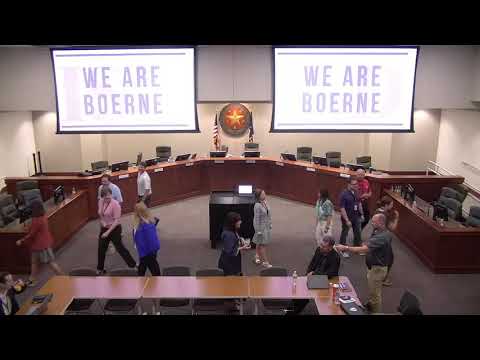
Boerne ISD trustees spent the June 9 workshop reviewing how recent state school finance changes (House Bill 2) affect the district and considering local steps to address funding shortfalls.
House Bill 2 effects and hold-harmless loss: Administration told trustees that while HB2 injects new state dollars for teacher retention and other allotments, an elimination of a previous hold-harmless provision reduces Boerne ISD’s net gain by about $2.4 million. Staff estimated the district will receive about $3.0 million from the teacher retention allotment, roughly $470,000 from a support-staff allotment, and $150,000 conservatively for special-education initial-evaluation funding, but these increases are offset by formula changes and compressed tax yields.
VADER and local revenue options: Bond counsel Clay Benford and finance staff explained mechanics and risks of a Voter Approval Tax Ratification Election (VADER). Staff proposed asking voters to approve three additional "golden pennies" within the M&O rate while reducing the I&S (debt) rate by one penny. Administration estimates the three golden pennies would generate approximately $4.3 million net locally; combined with HB2 allocations, staff projected about $8.9 million available if the VADER succeeds versus roughly $4.6 million on the HB2 baseline if it fails. Benford cautioned trustees that a VADER requires a simple-majority vote and explained sequencing strategies so the district would not unnecessarily risk debt-service revenue if voters reject the measure.
Competitive Strategic Financial Plan and compensation proposals: District leaders described a Competitive Strategic Financial Plan (CSFP) that prioritizes compensation to recruit and retain staff. Key proposals include raising starting teacher pay to $60,000; setting paraprofessionals at $16/hour and auxiliary positions at $15/hour; applying a 3% increase to other professional staff; deploying targeted retention stipends; and increasing the district contribution to employee health-care premiums. HR staff recommended keeping nurses, librarians and instructional coaches on the teacher step scale (estimated cost about $200,000) to avoid losing those staff.
Health care and TRS impacts: Staff noted recent TRS changes are increasing district health-related costs; a June 3 update to TRS implied an estimated ~$690,000 increase in premiums for the district. Staff warned that leaving TRS would lock the district out of TRS for five years and recommended the benefits committee explore options before pursuing major changes.
Capital replacement, debt service and child nutrition: Administration described chronic underfunding of capital replacement (no steady set-aside in recent years due to recapture) and proposed a modest capital-replacement contribution ($250,000) and $100,000 for increased property-insurance costs. Staff outlined a defeasance strategy for 2016 bonds that would reduce future interest payments and discussed the effect of a 1¢ I&S rate reduction on levy calculations. Child nutrition and meal pricing remain largely unchanged in the proposed budgets.
Facility rental policy: Staff proposed raising facility rental rates (per-hour) to align with neighboring districts and capture an estimated $200,000–$300,000 in annual revenue. Trustees raised concerns about community access, nonprofit and church renters being priced out, and asked staff to consider phased or tiered increases, stronger insurance and security requirements for large events, and clear exceptions for community partnerships.
Next steps: Staff will bring a formal budget to the board for adoption next week and return with VADER wording, legal guidance, refined revenue estimates after certified values are available in July, and recommended resolutions that define actions in the event a VADER fails. Trustees expressed broad support for prioritizing compensation but asked staff to continue refining numbers and community messaging.
Representative quote: "We want the best teacher in every classroom," Dr. Kraft said, summarizing the CSFP aim to use local and state resources to make teacher compensation competitive.