Get Full Government Meeting Transcripts, Videos, & Alerts Forever!
Get email alerts on the School Construction topic
No spam. Unsubscribe anytime.
Bath County board debates sprinkler strategy as school renovations advance; approves testing, masonry and inspection work
Summary
At a July 28 meeting the Bath County Board heard detailed design and contractor updates on middle‑ and high‑school renovations, debated whether to move sprinkler work from alternate to base bid to reduce future change orders, and approved testing/balancing, masonry repair PR‑37 and special inspection services.
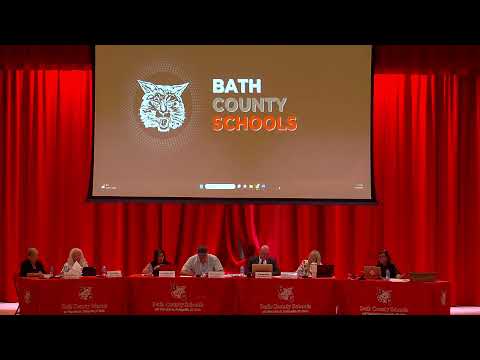
The Bath County Board of Education on July 28 heard updates on middle‑ and high‑school renovation projects and approved several construction‑related actions while staff urged the board to decide whether to move sprinkler work from an alternate to a base bid.
The project designer (Speaker 3) told the board the middle school design development is roughly 75% complete and scheduled a document review for Aug. 19. He recommended the board consider making the sprinkler scope a base‑bid item so contractors know the building’s fire protection up front and the district avoids multiple later change orders to plug concealed openings discovered once demolition exposes structure. "We are recommending that the sprinkler scope become base bid to the project," he said, noting the choice would change how contractors price mechanical, plumbing and electrical work but would limit later unforeseen change orders.
Why it matters: moving sprinklers into the base bid raises the immediate construction‑cost line item but can reduce the district’s exposure to many small, unpredictable change orders that arise when hidden holes or penetrations must be corrected after demolition. Speaker 3 said including sprinklers in the base bid gives contractors certainty on scope and reduces the incentive for them to inflate other trade pricing to cover both scenarios.
Contractor representatives described rough cost tradeoffs but cautioned the numbers quoted during the meeting were estimates. A construction representative (Speaker 5) said sprinkling the building would add several hundred thousand dollars and gave an illustration range (comments during the discussion referenced figures such as about $68,000 and on the order of $600,000–$700,000 for different scopes), emphasizing that mechanical and other trade pricing is affected if sprinklers remain an alternate.
Board members pressed staff on code requirements. Speaker 1 asked whether sprinklers were mandatory; the project designer replied that the legal obligation is to ensure the building is protected from fire and that sprinklers are one of multiple compliant solutions, including fire dampers and increased fire‑rating of assemblies. "Sprinkler is just one solution to do that," he said.
On the high school projects, staff reported substantial progress: punch‑list work, final brickwork and flooring finishers were underway and paving was complete, with a target of Aug. 12 for substantial completion of the layback area.
Votes and contract actions: the board approved multiple items tied to the renovation work by voice vote. Motions carried to approve testing and balancing services from Thermal Balance Incorporated for BG‑22‑376, to approve change order PR‑37 (masonry tuckpointing and high‑wall repairs near the kitchen and gym), and to accept special inspection services from Ellie Gregg for BG‑22‑520 (the BCHS Lavec Phase 2 project). The board also approved the consent agenda items A–T (excluding item b) by motion.
The board scheduled additional review for Aug. 19, when staff will present detailed drawings, sprinkler cost impacts and updated budget estimates so members can decide whether to convert the sprinkler alternate to base bid.
The board adjourned at the close of the regular meeting.