
State Board debates limits and disclaimers for members’ outside legislative testimony
Get AI-powered insights, summaries, and transcripts
Subscribe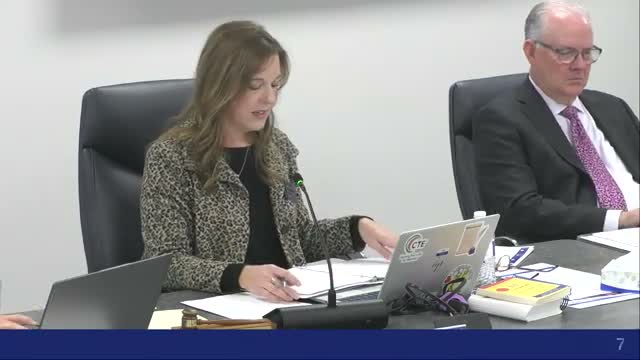
Summary
Board members debated whether individual board members should testify or send communications on education bills without disclaimers, with Attorney General guidance referenced and a requirement emphasized that written communications include a disclaimer noting views are personal. The exchange grew heated, with mutual accusations about changing long-standing norms.
At its March 7 meeting, the State Board of Education debated whether board members may testify or otherwise publicly oppose education legislation without a clear disclaimer that they are speaking as individuals, not for the board.
Board member Neri opened the item by saying the Attorney General advised members that their freedom of speech remains intact but that they should make it clear when they are not speaking for the board. Neri referenced board operating policy 1.03 and encouraged members to add a disclaimer to written communications.
Board member Deborah Neary said she was raising the issue because actions by four board members—emails and outside testimony—had deviated from what she described as a long-standing ethical practice of not testifying in opposition to board positions. “I was just concerned that four board members were following this ethical standard that’s been in place forever, and four board members decided to change it,” Neary said, urging a re‑examination of expectations.
Several members pushed back. Kirk Penner said he would “continue to voice [his] opinion against bills that [he] think[s] are nonsense and bad for education,” and accused Neary of lecturing the board. President (district representative) and others noted a distinction between an individual sending emails or testifying on issues outside the board’s statutory scope and circumstances where a member speaks on education bills that affect the department’s work.
After extended back‑and‑forth, the board president reiterated that board operating policy 1.03 requires adding a disclaimer to written communications indicating statements represent a board member’s personal views and not the board’s official position. The president also said the president may speak for the board only when directed by the full board.
Why it matters: The discussion touches on transparency and public trust. Board members said they want clear norms so superintendents and the public understand when a member is acting on personal views. The exchange included direct accusations and denials about historical practice and recent emails sent by members, underscoring the political sensitivity of the question.
What’s next: The board encouraged members to attach the recommended disclaimer to written communications per policy 1.03 and indicated the topic may be revisited in committee for any procedural clarification.